Mini split air conditioner installers in Blue Springs, MO handle everything from a single bonus-room retrofit to a five-zone whole-home system, and the gap between a comfortable result and a callback usually comes down to sizing and refrigerant work. Several things changed for 2026, including equipment standards and a federal tax credit homeowners used to count on. This guide from the team at Jackson County Comfort covers what to ask before you hire, what correct installation actually involves, and what it costs this year.
What to Ask Mini Split Installers in Blue Springs Before You Hire
Product knowledge only gets you halfway. The installer matters as much as the equipment.
Refrigerant work is federally regulated, not just a best practice. EPA regulations under Section 608 of the Clean Air Act require that technicians who maintain, service, repair, or dispose of equipment that could release ozone depleting refrigerants into the atmosphere must be certified.
Certification is required for anybody who, in the course of maintenance, service, or repair of an appliance, could reasonably be expected to violate the integrity of the refrigerant circuit and release refrigerants into the environment. Any crew running line sets or charging a system without that credential is working outside federal law.
Before signing a contract, ask these questions:
- Are your technicians EPA 608-certified, and can you show the card?
- Do you pull mechanical and electrical permits on every job, or only when asked?
- Will you perform a written room-by-room load calculation before quoting equipment size?
- What's covered under your labor warranty, separate from the manufacturer's parts warranty?
- Who handles startup and commissioning, and is a charge/airflow check included?
A company that answers all five clearly, in writing, is one worth trusting with the installation. If you'd like our team to walk through your home and answer these questions in person, get a free estimate.
What Is a Ductless Mini-Split System?
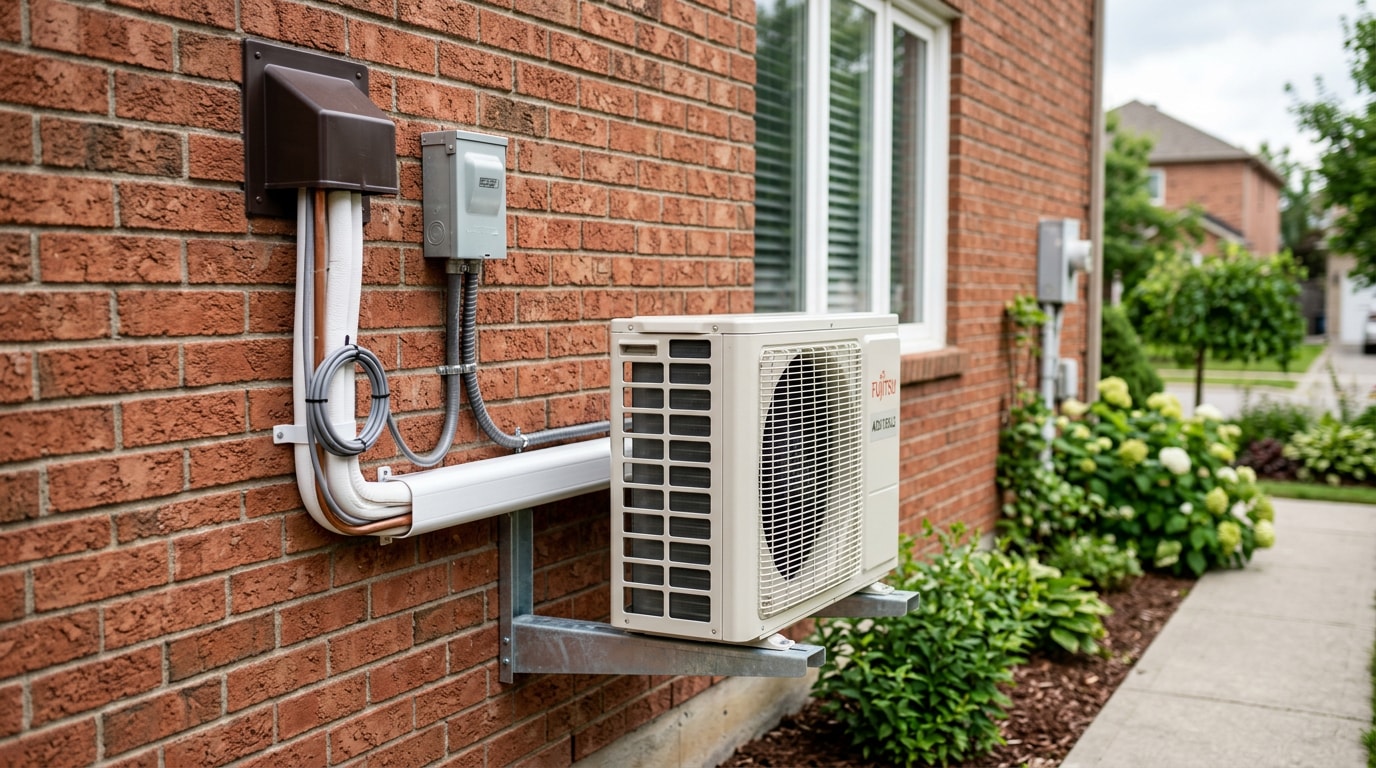
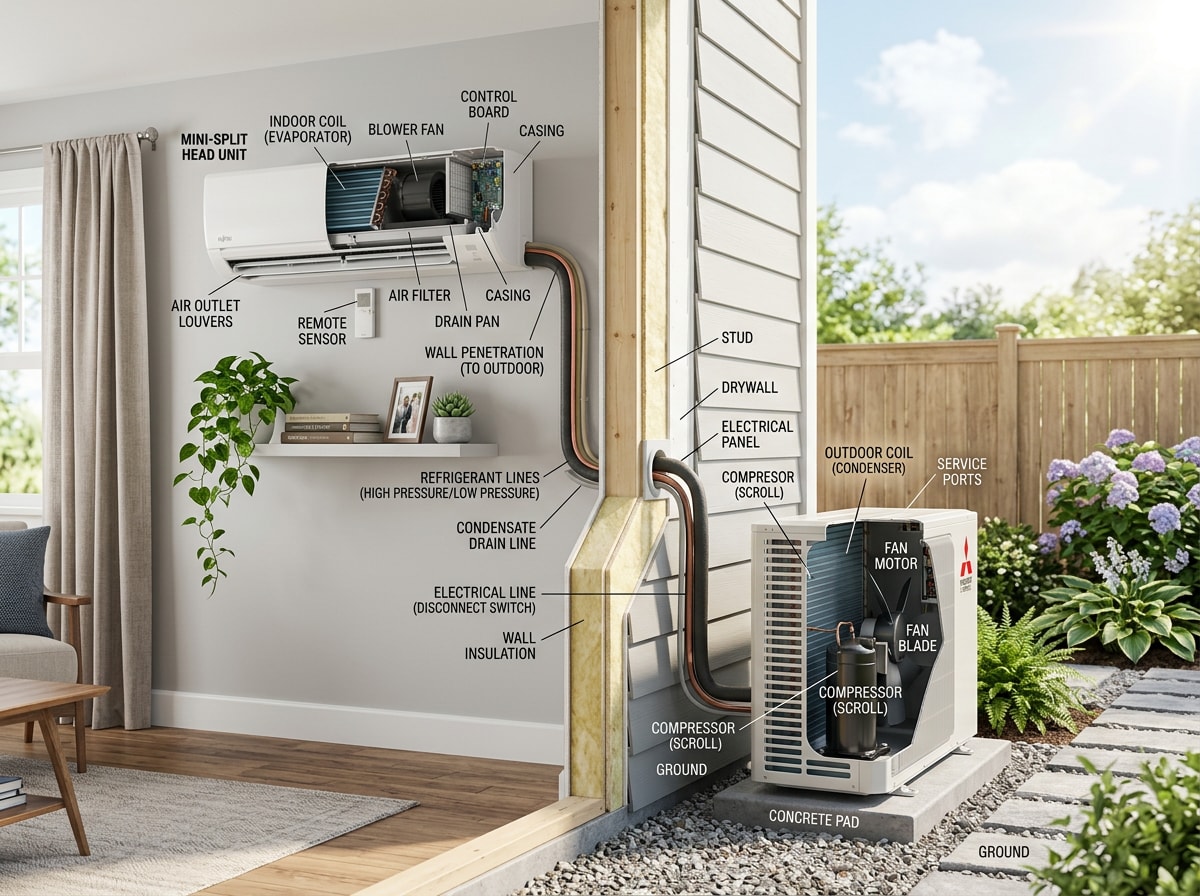
A ductless mini-split uses an indoor unit mounted in the room, an outdoor condenser placed outside, and a refrigerant line connecting the two through a small wall opening. One outdoor unit can power multiple indoor units, each controlled independently, a setup contractors call zoning.
There's no ductwork involved. Cooled or heated air comes directly from the indoor head into the room. Because each zone runs independently, you can cool a sunroom while keeping a rarely used guest room at a different setting, without conditioning space nobody's using.
Why Ductless Cooling Works So Well in the Kansas City Metro
Kansas City summers combine high heat with sticky humidity, a combination that a single-stage central AC struggles to wring out of the air. A standard system blasts cold air until the thermostat is satisfied, then shuts off completely, letting humidity creep back up between cycles.
An inverter-driven mini-split runs longer at a steadier, lower output instead, pulling moisture out of the air continuously rather than in short bursts. On a muggy afternoon, that's often the difference between a room that reads 72°F and feels dry, versus one that reads 72°F and feels clammy.
Ductless systems also solve a common retrofit problem in older Blue Springs homes. Houses with hydronic boiler heat, additions built on slabs, or finished basements often have no existing ductwork and no easy path to add it. A mini-split conditions those spaces through a small wall penetration, without demolition. If you're also weighing backup heat options for one of these older homes, our breakdown of a hybrid heating system in Blue Springs covers how a heat pump and furnace can work together through winter.
Single-Zone vs. Multi-Zone: Picking the Right Configuration
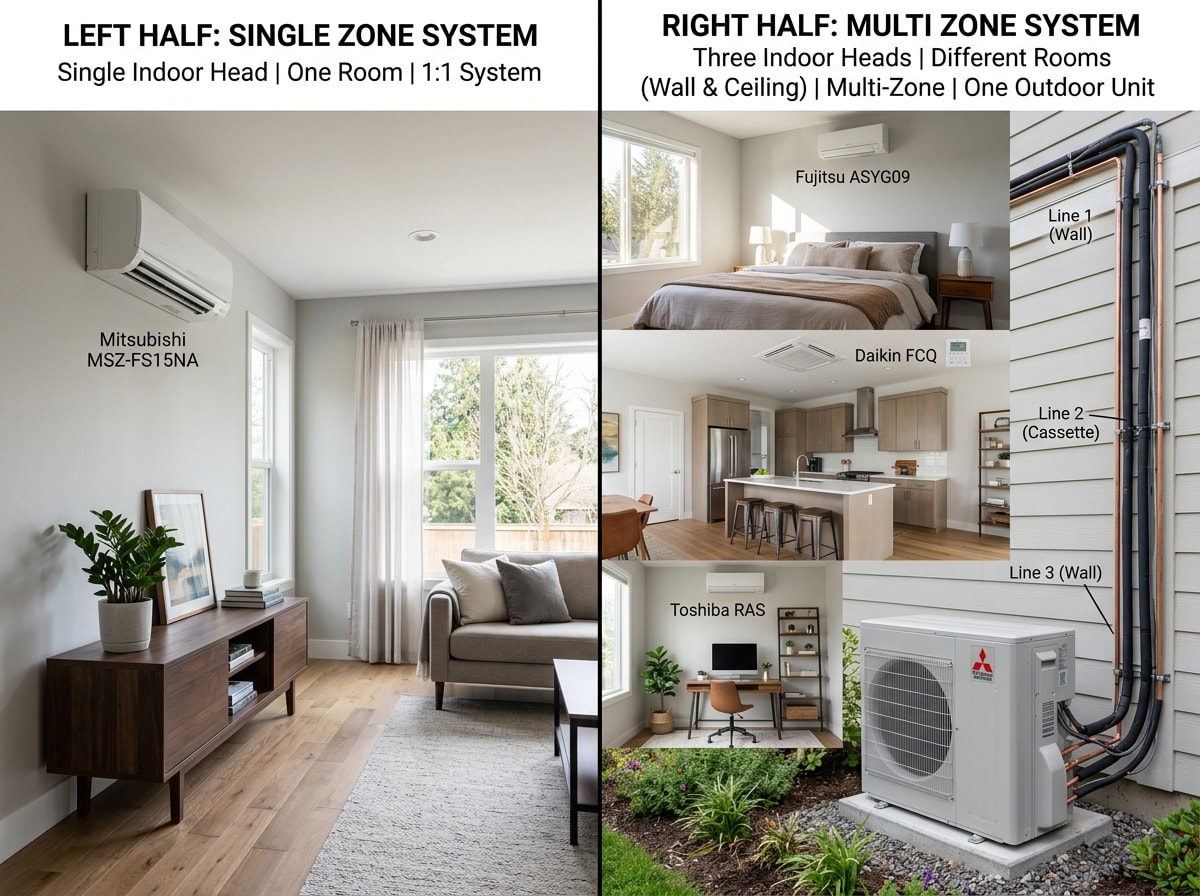
A single-zone mini-split pairs one outdoor condenser with one indoor head. It works well for a single addition, bonus room, or home office.
A multi-zone mini-split connects one outdoor unit to two or more indoor heads, sometimes up to eight depending on the model, so several rooms are conditioned independently from one outdoor condenser.
Indoor units also come in different styles:
- Wall-mounted heads are the most common and generally the least expensive to install.
- Ceiling cassettes sit flush with the ceiling for a lower profile, often preferred in finished living areas.
The right configuration depends on room layout, ceiling height, and how visible you're willing to let the equipment be. There's no single correct answer for every home.
Sizing a Mini-Split Correctly: Why Load Calculations Matter
Mini-split sizing should be determined by a room-by-room load calculation, not square footage alone. Manual J is the national ANSI-recognized standard for producing HVAC equipment sizing loads for homes, and a proper load calculation performed under that procedure is required by national building codes and most state and local jurisdictions.
Skipping this step causes two common problems. An oversized unit cools the room quickly but shuts off before pulling out much humidity, leaving the space cold and clammy. An undersized unit runs constantly and still can't keep up on the hottest days.
When our crew retrofitted a split-level home near Stone Canyon last year, the original square-footage estimate called for a 12,000 BTU head. A room-by-room calculation, accounting for south-facing windows and a finished walkout basement below, showed the upstairs bonus room actually needed 9,000 BTU with a separate zone for the basement. That's the kind of detail square footage alone misses.
What Mini-Split Installation Costs in Blue Springs in 2026
Two things changed for 2026 that affect every quote you'll get this year.
First, equipment. 2026 models must use a low-GWP A2L refrigerant, R-32 or R-454B, which adds roughly 10 to 15 percent to equipment cost versus pre-2026 R-410A units. That premium shows up in every quote, not just ours.
Second, incentives. The federal Section 25C Energy Efficient Home Improvement Credit will not be allowed for any property placed in service after December 31, 2025. Homeowners who priced a mini-split last year using a $2,000 federal credit will not see that credit on a 2026 invoice. State and utility rebates are a separate program and may still apply, but check current terms with your utility before assuming a discount.
Here's what fully installed pricing typically looks like this year:
| Configuration | Typical Installed Cost (2026) |
|---|---|
| Single-zone, 9,000–12,000 BTU | $1,200 – $3,100 |
| Single-zone, 18,000–24,000 BTU | $1,900 – $5,500 |
| 2–3 zone multi-zone | $4,000 – $9,000 |
| 4–5 zone multi-zone | $7,500 – $14,500 |
Total mini split installation cost runs from about $1,200 to $14,500 fully installed, with a single-zone system for one bedroom landing between $1,500 and $3,100, and a three-zone setup running $6,500 to $11,000. Brand tier, electrical work, and line-set length all push a quote toward the higher end of these ranges. Ask any installer for an itemized quote rather than a flat per-zone estimate, since site conditions vary.
Mini-Split Installation, Maintenance & Replacement in Blue Springs
A full-service installer should support a mini-split well beyond the day it's mounted on the wall.
New installation involves a load calculation, correct refrigerant line routing, a secure outdoor pad or bracket, and a startup check confirming the system is charged and running at rated capacity before the crew leaves. See our mini-split installation services for current equipment options.
Maintenance matters even though ductless systems need less of it than ducted ones. Indoor filters should be cleaned every few weeks during heavy use, and an annual tune-up checking refrigerant charge, coil cleanliness, and drainage helps the system reach its full expected lifespan.
Replacement often pays off once a mini-split is pushing 10 to 12 years old or losing efficiency. If central air or a heat pump makes more sense for part of your home instead, our air conditioner installation and heat pump installation pages cover those options side by side with ductless.
We serve Blue Springs and the surrounding area; see recent completed projects or check coverage on our Blue Springs service page.
FAQ
Do I need a permit to install a mini split in Blue Springs, MO?
Most municipalities in the Kansas City metro require mechanical and electrical permits for mini-split installation. Skipping permits risks a failed inspection at resale and can complicate insurance claims later. Confirm current requirements with your local building department before work begins.
How many zones can one outdoor unit support?
A single-zone system pairs one outdoor unit with one indoor head. Multi-zone outdoor units typically support two to eight indoor heads, depending on the model. The outdoor unit's capacity is matched to the combined load of all connected indoor heads, since oversizing it hurts efficiency on multi-zone setups.
How long does mini-split installation take?
A single-zone installation is usually a one-day job. Multi-zone systems with three to five indoor heads typically take two to three days. Either way, the outdoor unit needs a dedicated electrical disconnect, a properly routed line set, and condensate drainage tested before the crew leaves.
How much does it cost to install a mini-split air conditioner in 2026?
Cost depends mainly on the number of zones, total BTU capacity, brand, and how much electrical work is needed. A single-zone system typically runs $1,200 to $5,500 installed; multi-zone systems run higher depending on zone count. Ask for an itemized quote rather than a flat per-zone estimate.
Is the federal tax credit for heat pumps still available in 2026?
No. The Section 25C credit expired for any equipment placed in service after December 31, 2025. A 2026 mini-split installation does not qualify for that federal credit, though state or utility rebates may still be available separately.
When does a mini-split make more sense than central air?
Ductless systems make the most sense for additions where extending ductwork isn't practical, older homes without existing ducts, and rooms that run hotter or colder than the rest of the house. Mini split heat pumps that earn the ENERGY STAR label are independently certified to save energy, and because they transfer rather than generate heat, they use up to 60% less energy than standard home electric radiators. Mini-splits give per-room control without the energy losses that come from leaky or poorly insulated ductwork. Our full HVAC contractor services page breaks down how ductless compares to a full system replacement if you're still deciding.