A floor heating system in Olathe, KS warms a room from the subfloor up using hot-water tubing or electric cable instead of pushing heated air through ducts. Before signing a contract, Johnson County homeowners need real installed costs, a straight answer on which flooring works, and what Kansas code actually requires. Here's what our licensed technicians have learned installing and repairing both hydronic and electric systems in homes across the metro.
How a Floor Heating System Works in an Olathe Home
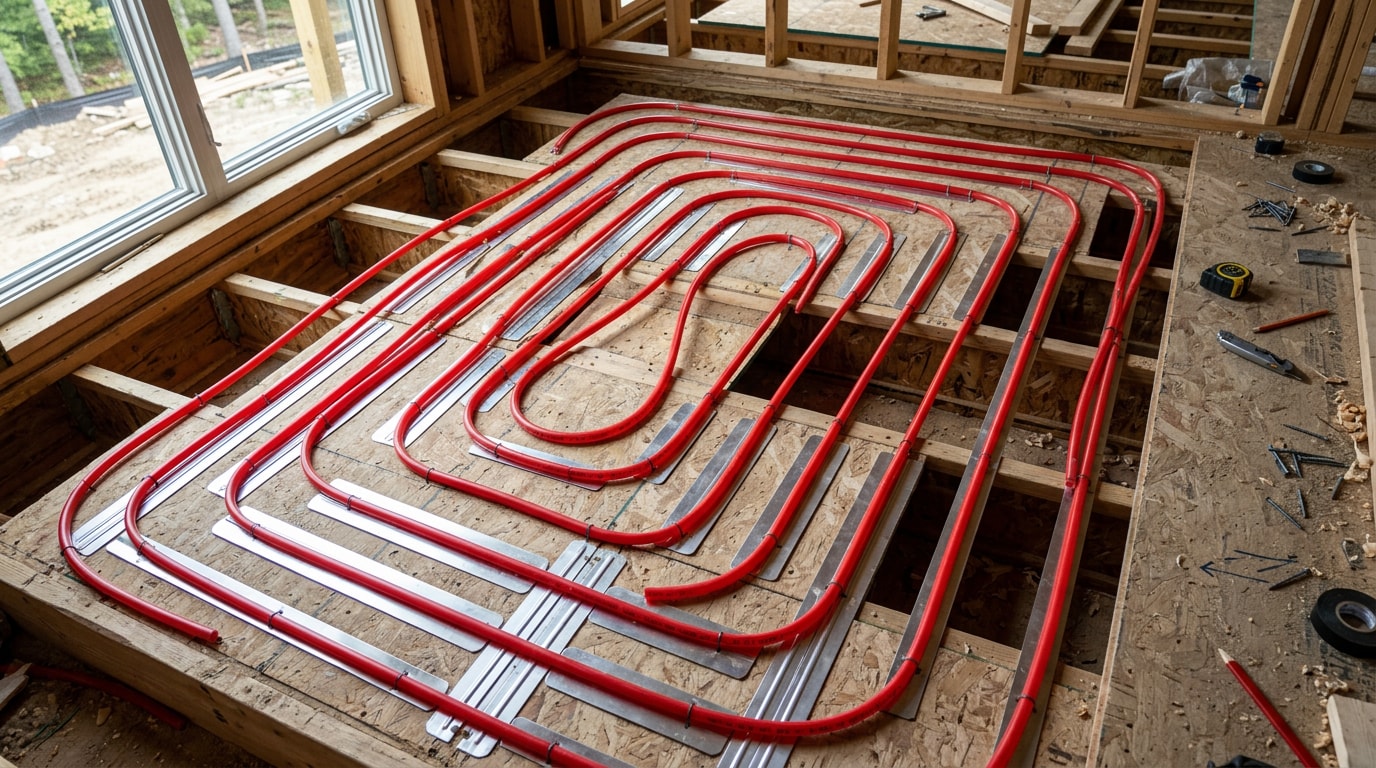
Floor heating comes in two forms: hydronic tubing filled with warm water, or electric cables and mats, both installed beneath the finished flooring. A boiler or water heater drives the hydronic loop; electric systems run off a dedicated circuit and a floor-sensing thermostat.
Olathe homeowners typically choose one of two paths:
- Single-room electric systems for a bathroom, kitchen, or mudroom remodel
- Whole-home hydronic systems designed into new construction or a major addition
Both approaches heat the floor surface directly, which then radiates warmth to everything in the room rather than relying on blown air to raise the temperature.
Hydronic vs. Electric Radiant Heat: Which Fits Your Olathe Home
The right system depends on how much space you're heating and whether you're renovating or building new.
| Factor | Hydronic (water-based) | Electric (cable or mat) |
|---|---|---|
| Best use case | Whole-home heating, new construction, additions | Single rooms, bathroom/kitchen retrofits |
| Heat source | Boiler, combi unit, or water heater | Dedicated electrical circuit |
| Typical install cost | Higher upfront, lower to operate at scale | Lower upfront, simpler for small areas |
| Retrofit difficulty | More invasive, works best when a floor is already open | Easier to add during a remodel |
| Flooring compatibility | Tile, stone, engineered wood | Tile, stone, laminate, some LVP |
The U.S. Department of Energy notes that hydronic systems are the most popular and cost-effective radiant heating systems for heating-dominated climates , which fits Kansas winters. Electric radiant floors still make sense for additions or single rooms where extending a hydronic loop isn't practical, though the Department of Energy points out that electric radiant floors may make sense for home additions when extending the heating system is impractical, though homeowners should also consider mini-split heat pumps for added cooling .
What a Floor Heating System Costs in Olathe, KS
Pricing varies by system type, square footage, and whether you're installing new flooring at the same time. These are typical ranges we see on Johnson County projects; your exact quote depends on a site visit.
| Project | Typical Installed Cost |
|---|---|
| Single bathroom (electric) | $1,500 – $6,000 |
| Per square foot, electric | $6 – $15 |
| Per square foot, hydronic | $7 – $20+ |
| Whole-home hydronic system | $12,000 – $40,000+ |
Costs climb when new flooring, subfloor leveling, or a boiler upgrade is part of the job. A retrofit under an existing floor also tends to cost more than installing radiant heat during new construction, because there's no need to disturb finished surfaces when the subfloor is already open. If you want a number specific to your home, get a free estimate before you budget for flooring materials.
Benefits of Radiant Floor Heating
Radiant floors spread heat evenly across the entire surface, which removes the cold spots and temperature swings that come with forced-air vents. Because there's no blower pushing air through ductwork, radiant heat also avoids circulating dust and allergens, a real advantage for allergy-prone households.
Picture a tiled Olathe bathroom remodel next to one with carpet and a baseboard heater: the tiled radiant floor warms the surface directly underfoot, while carpet insulates against that same heat, so tile and stone deliver the most noticeable comfort gain. Radiant systems also free up wall and floor space since there's no radiator or vent cover to design around, and they run silently compared to a blower cycling on and off.
Installation, Permits & Olathe Code Requirements
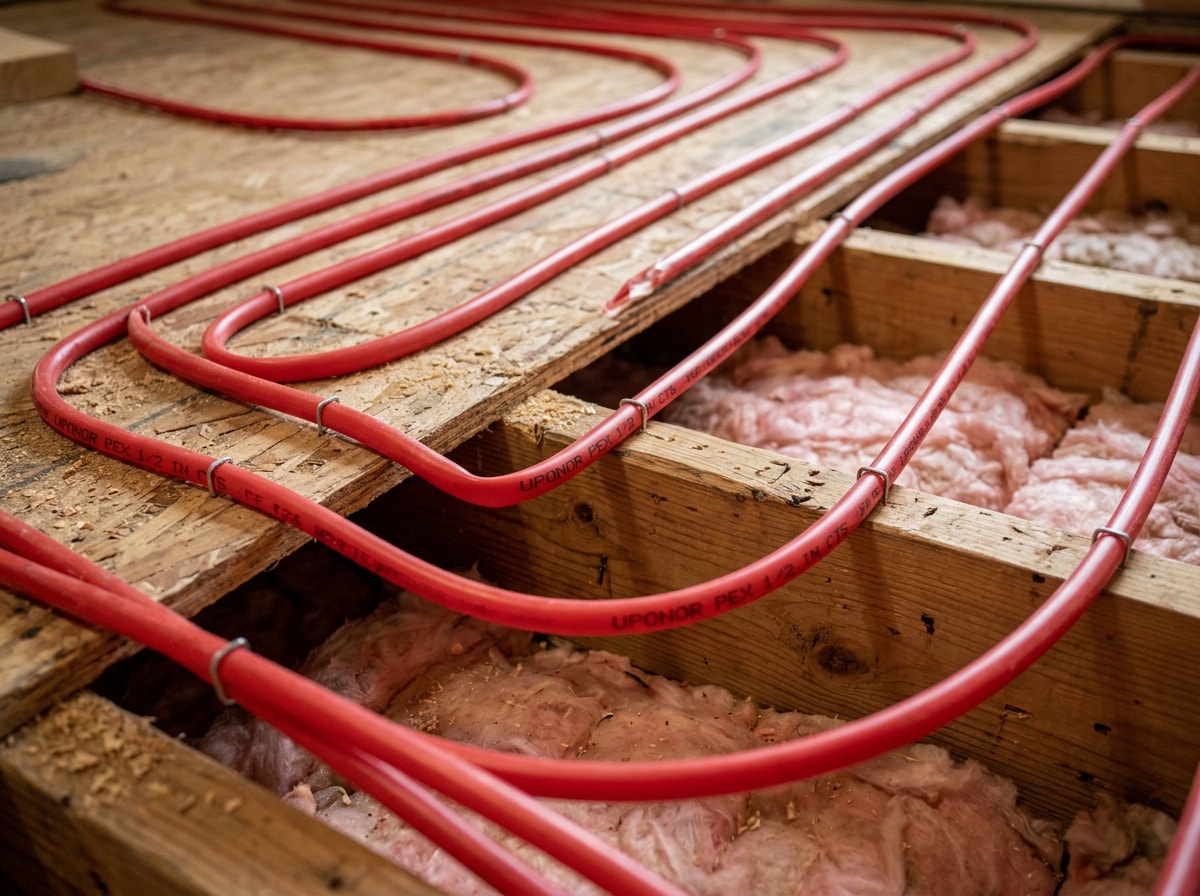
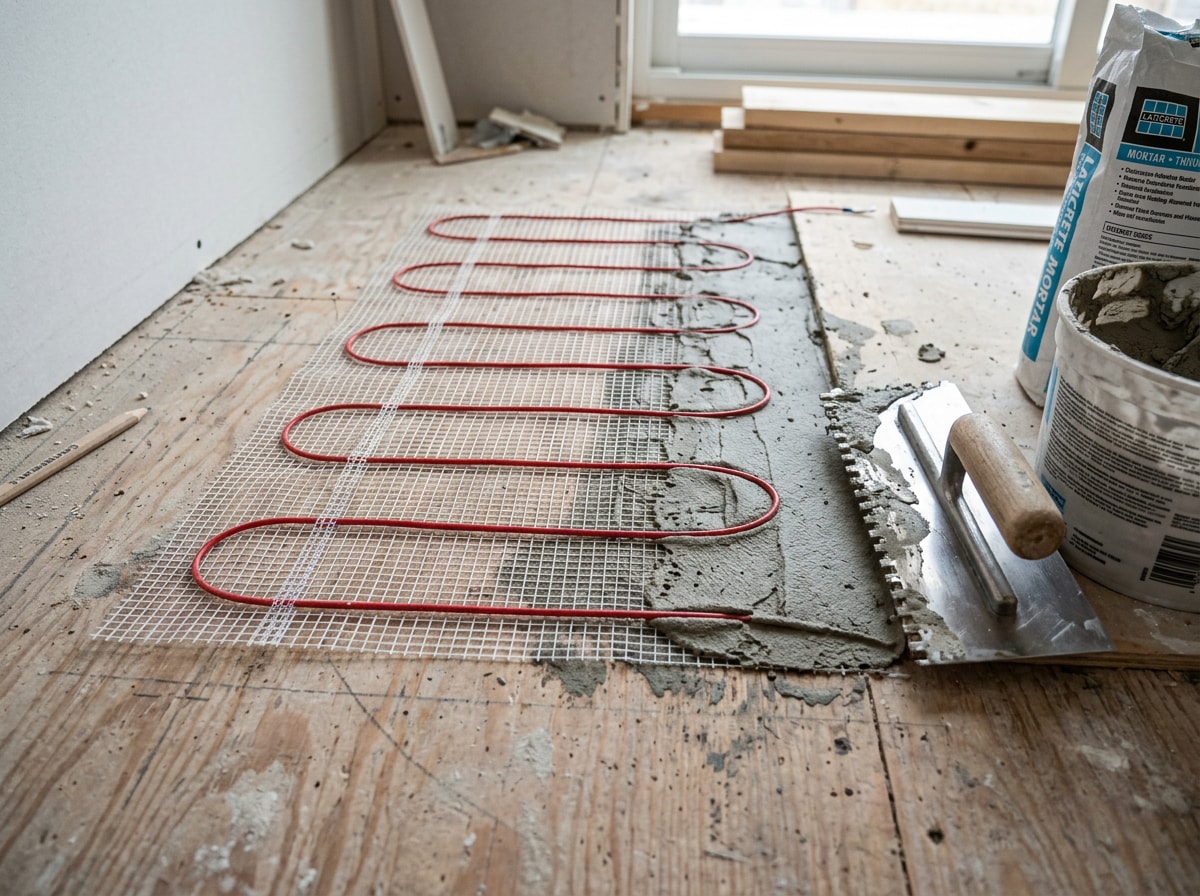
Local radiant floor heating installation covers hydronic system design (boilers, manifolds, and in-floor PEX tubing) alongside electric mats and cables for targeted spaces like basements and bathrooms. Kansas's adopted residential code specifically addresses this work: electric radiant heating systems must be installed according to manufacturer instructions, and systems installed in concrete or masonry must be identified as suitable for that application and secured as specified in the installation instructions , per the Kansas Residential Code's radiant heating section.
Permitting is part of the job, not an optional step. The City of Olathe's own guidance confirms that new homes, decks, swimming pools, furnaces and water heaters are all examples of projects that require a permit , and mechanical/HVAC work, including boiler and radiant heating installations, falls under that same trade-permit umbrella. Check the Olathe building permit guide before work begins, or let your contractor pull it for you.
Electric systems installed under bathroom or kitchen tile also need to meet National Electrical Code requirements for ground-fault protection, which is one more reason to use a licensed electrician rather than a DIY kit from a big-box store. Many homeowners pair a new radiant zone with a smart thermostat installation or a full HVAC zoning system installation so the radiant loop and the rest of the home's heating work together instead of fighting each other.
Floor Heating Repair & Maintenance
Common floor heating repair calls fall into three buckets: uneven heating across the room, thermostat malfunctions, and leaks at the tubing or manifold. Technicians use pressure testing and thermal imaging to pinpoint which of these it is before cutting into any flooring.
Routine hydronic maintenance includes:
- Checking boiler pressure and relief valves
- Flushing lines to clear sediment
- Testing the manifold and zone valves
- Confirming thermostat calibration against actual floor temperature
Skipping this upkeep is the most common reason a radiant system starts underperforming years after installation. If you'd rather see how a heating system maintenance visit is actually structured, our heating system maintenance guide breaks down what's typically included and why it pays off over the life of the equipment. Homeowners in Johnson County can also check our Olathe service area page to confirm coverage, or browse our completed projects to see hydronic and electric radiant work we've handled nearby.
If your Olathe home still relies on a furnace or heat pump for most of its square footage and you're weighing a full system upgrade instead of adding radiant heat, our HVAC system replacement and heating contractor teams can walk through both paths side by side so you're comparing real numbers, not guesses.
FAQ
What Is a Floor Heating System?
A floor heating system, also called radiant heat flooring, warms a room from the floor up using either electric heating cables or hydronic water-based tubing installed beneath the flooring surface.
How Does a Hydronic Radiant Heating System Work?
A hydronic system circulates warm water through PEX tubing laid under the floor. A boiler heats the water, which flows through the tubing and radiates warmth upward into the room above.
How Much Does a Floor Heating System Cost in Olathe, KS?
Expect roughly $1,500 to $6,000 for a single bathroom with electric heat, and anywhere from $12,000 to $40,000-plus for a whole-home hydronic system. Flooring type, square footage, and whether you need a new boiler all move the final number, so a site visit gives the most accurate figure.
Is Radiant Floor Heating Worth It?
For a bathroom or kitchen remodel, most homeowners find the comfort upgrade worth the cost, especially under tile. For whole-home heating, it's worth it if you're already opening up the subfloor for new construction or a major renovation; retrofitting an entire existing home is a bigger investment that needs a direct cost comparison against your current furnace or heat pump.
What Types of Flooring Work Best With Radiant Heat?
Tile and stone are the best conductors and the most common pairing with radiant heat. Engineered hardwood, laminate, and some LVP products also work, but always confirm the flooring manufacturer's warranty covers installation over a heated subfloor before you commit.
Can I Install Radiant Heating in an Existing Olathe Home?
Yes. Retrofit options exist for both hydronic and electric systems, usually installed from below through an accessible basement or crawlspace joist bay, or built up slightly above the existing subfloor. Either method can raise finished floor height by a fraction of an inch, which matters near doorways, cabinets, and transitions to other rooms.
Do I Need a Permit for Floor Heating in Olathe?
Generally, yes. Mechanical and electrical work tied to a new heating system, including boiler installs and dedicated circuits for electric radiant heat, falls under the City of Olathe's trade permit requirements. Your contractor should pull the permit and schedule the required inspection as part of the job.
Ready to compare real numbers for your home? Get a free estimate from the team at Jackson County Comfort and find out whether hydronic or electric radiant heat makes sense for your Olathe project.