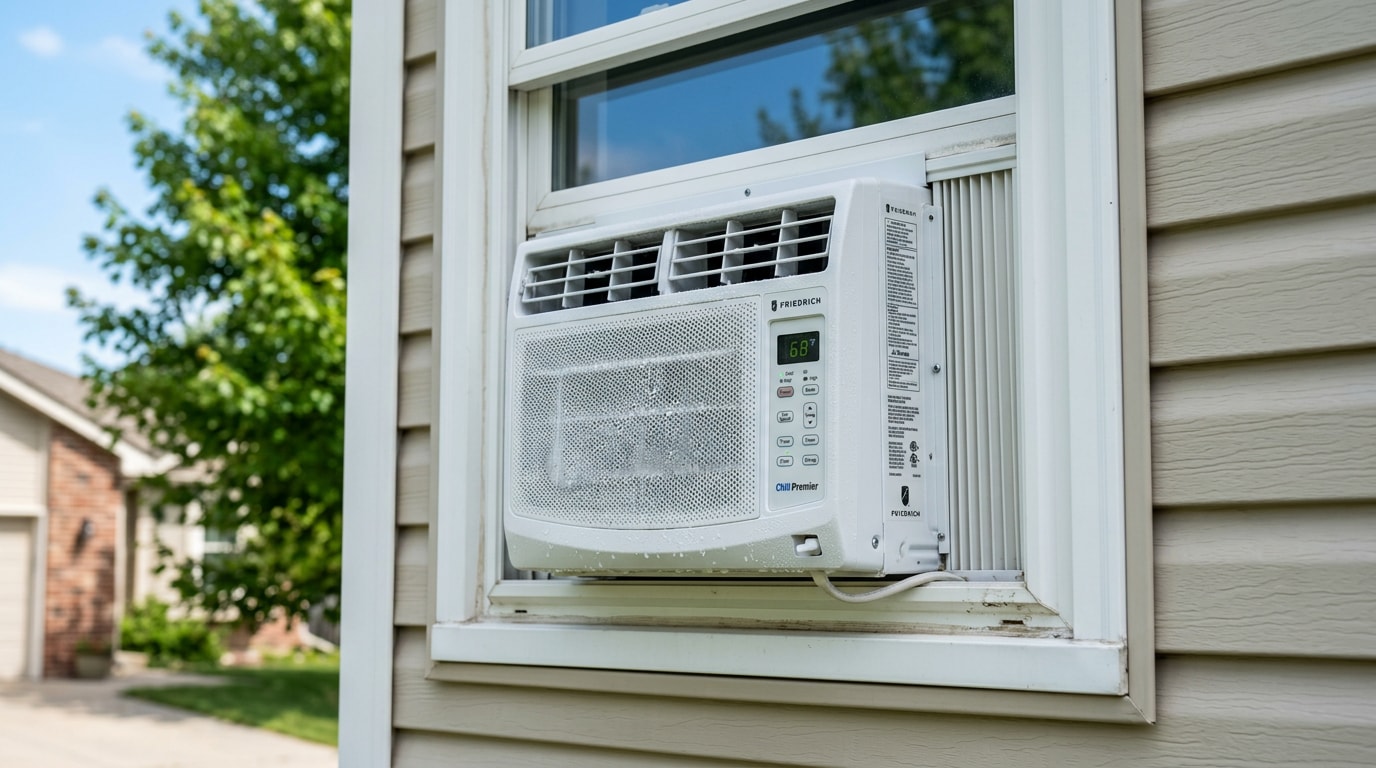
If your window AC not blowing cold air has you sweating through another Overland Park, KS afternoon, the fix is usually faster than you'd think. Most window units lose their cool for one of eight predictable reasons, and more than half of them take less than ten minutes to diagnose yourself. Work through the checks below in order, from the five-minute fix to the one that needs a licensed technician.
Quick Checks Before You Troubleshoot Further
Before digging into filters, coils, or wiring, rule out the simple stuff first. Most "window AC not cooling" calls turn out to be a setting, not a mechanical failure.
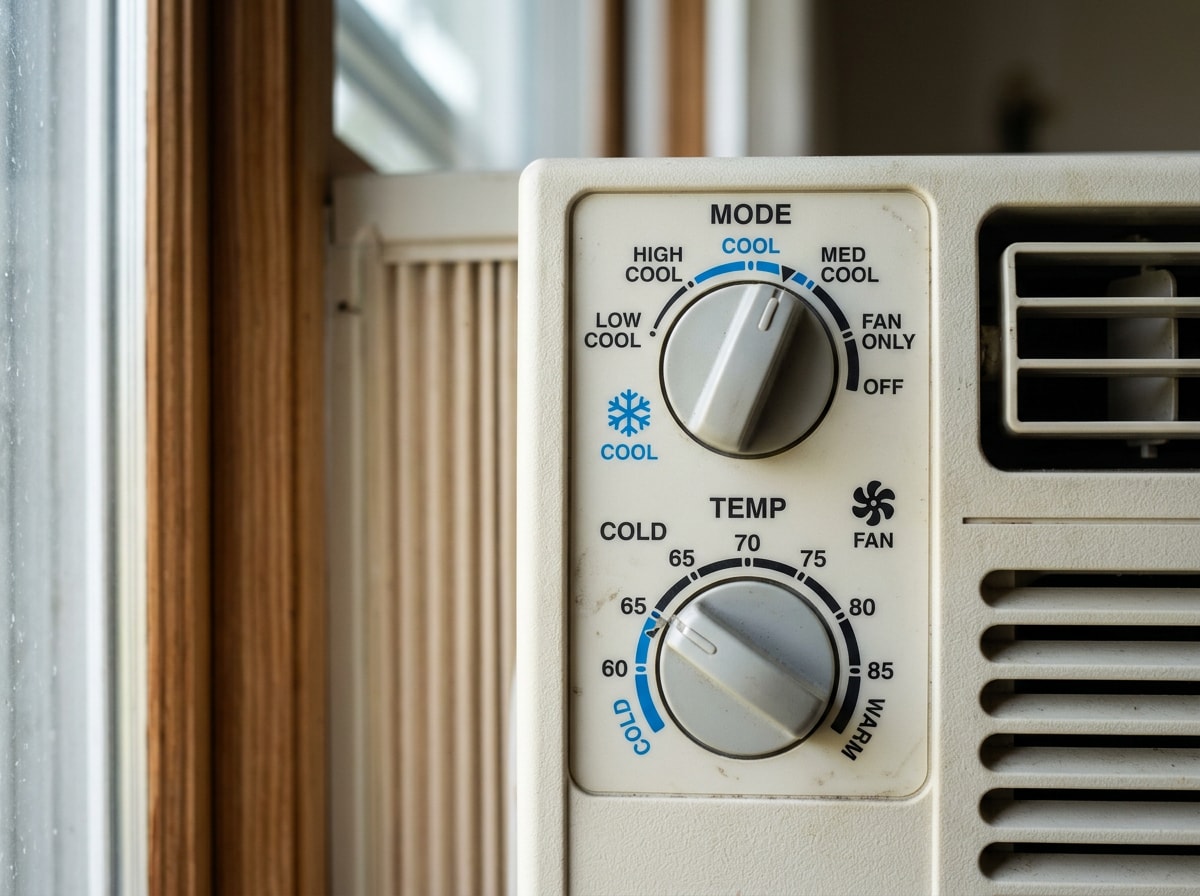
- Confirm the mode switch is set to Cool, not Fan Only. Fan mode moves air without actually cooling it.
- Set the thermostat dial or digital control at least 5 degrees below the current room temperature.
- Check that the unit is receiving power and hasn't tripped a reset button on the cord.
- Close doors and windows in the room. An open window lets conditioned air escape and lets warm air in, which can look exactly like a unit that isn't cooling at all.
Our technicians run through this same list first on every window AC service call in Overland Park. More often than not, the unit is already fixed before we touch a tool. If you've confirmed all four and your window AC is still blowing warm air, move on to the causes below.
Common Causes of a Window AC Not Blowing Cold Air
Most window AC cooling failures trace back to one of eight recurring issues, and they tend to follow a pattern: a five-minute fix on one end, a repair that needs a licensed technician on the other. We'll move from the easiest DIY jobs to the ones you shouldn't attempt yourself. Overland Park's humid, pollen-heavy summers make a couple of these causes show up here more often than in drier climates, so pay close attention to the first two.
Dirty or Clogged Air Filter
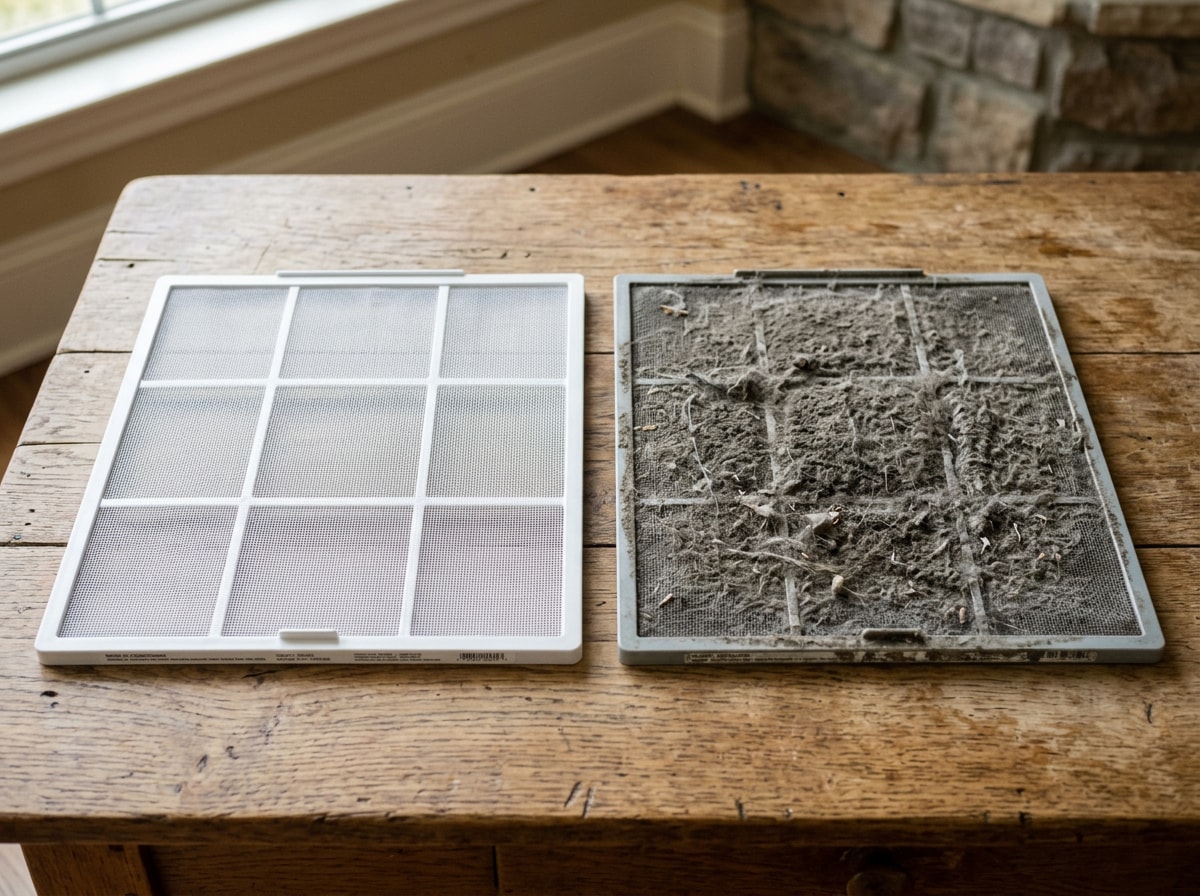
A dirty air filter is the top cause of a window AC not blowing cold air. It restricts airflow across the evaporator coil, forcing the unit to work harder while pushing out weaker, warmer air, and in humid conditions it can cause the coil to ice over entirely.
Pull the front grille and slide out the filter. Reusable mesh filters can be rinsed under running water and air-dried before reinstalling. Disposable filters should be replaced once they look gray or matted.
Routinely replacing or cleaning your air filters can lower an air conditioner's energy consumption by 5 to 15 percent , according to U.S. Department of Energy guidance. A clean filter affects your utility bill, not just comfort.
Overland Park's spring and early-summer cottonwood and pollen season clogs filters noticeably faster than drier regions see. Check yours every two to three weeks during peak season instead of waiting for a monthly reminder.
Blocked Front Grille, Vents, or Window Installation Gaps
Curtains, furniture, or blinds pressed against the front grille choke off the air the unit needs to pull in, and the same goes for blocked vents on the exterior side of the cabinet. Check that nothing sits within a few inches of either side.
Gaps around the window AC installation, where the unit meets the window frame or sash, let warm outside air leak into the room and undercut the cold air the unit produces. This is one of the cheapest problems on this list to fix. Reposition anything causing airflow blockage, and reseal gaps with foam weatherstripping or a side-panel kit. No tools or technician required.
Wrong Mode or Thermostat Setting
Even experienced owners occasionally hit the wrong button. Fan mode and Eco mode both still move air, but neither runs the compressor continuously, which can feel like a broken unit when it's actually working as designed.
Eco mode cycles the compressor off once the room hits the set temperature, then back on as the room warms slightly. That's normal energy-saving behavior, not a malfunction. Confirm the thermostat setting is on Cool mode and set several degrees below the current room temperature, then give it 10 to 15 minutes to respond before assuming something's wrong.
Frozen Evaporator Coil
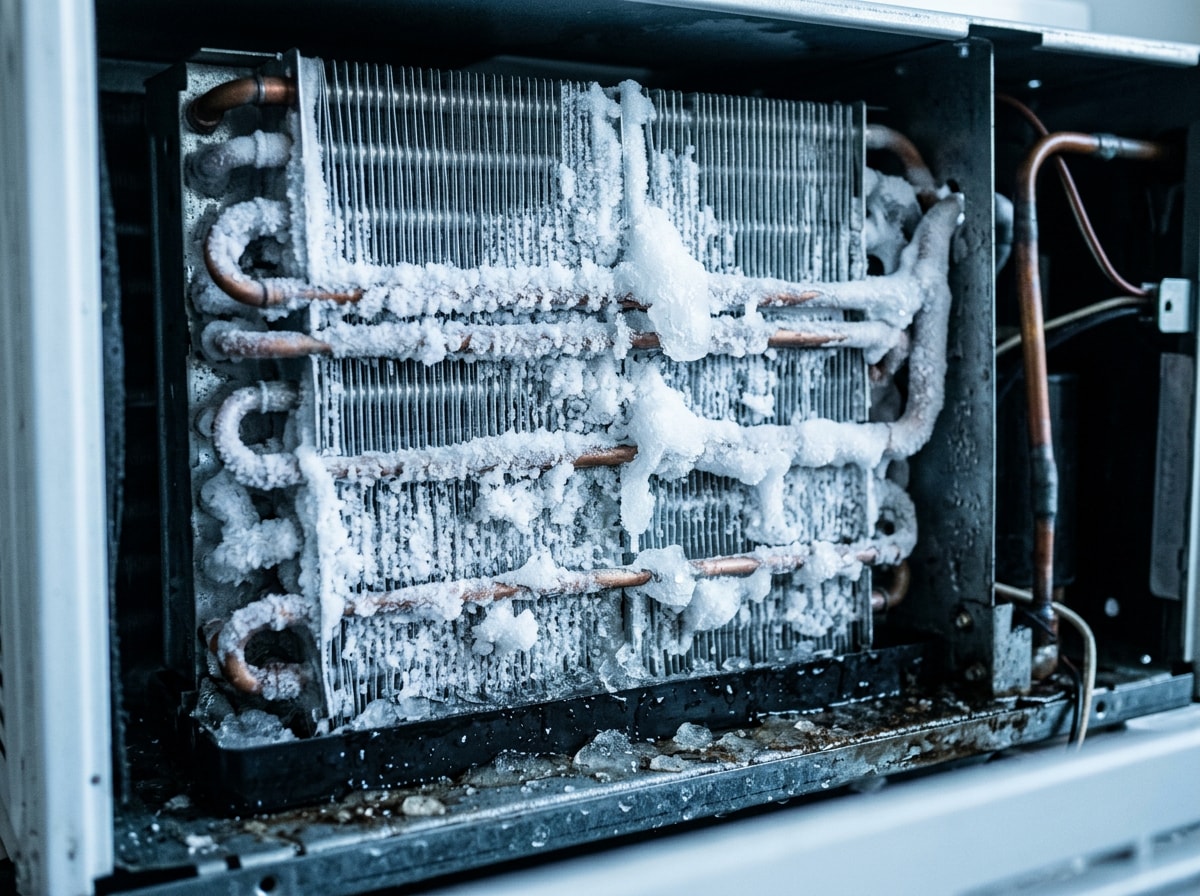
A frozen evaporator coil usually develops after restricted airflow, such as a dirty filter or blocked vent, or low refrigerant lets the coil's surface temperature drop below freezing and build ice instead of normal condensation. Running a unit with ice on the coils for an extended period can strain and damage the compressor.
If you see frost, switch the unit to Fan mode or unplug it and let it defrost naturally for a few hours. Never chip or scrape ice off the coil. The thin aluminum fins bend and puncture easily. Once fully defrosted, address whatever caused the icing before running Cool mode again.
Dirty or Blocked Coils and Fins
Dust and grime on the evaporator or condenser coils act like insulation, blocking the heat transfer the system depends on. Over time, this forces the compressor to run longer for less cooling.
Bent aluminum fins compound the problem by physically restricting airflow through the coil. A fin comb, an inexpensive tool sold at hardware stores, straightens bent fins back into alignment. For the coils themselves, a soft brush or a no-rinse condenser coil cleaning spray removes buildup without bending more fins. Clean coils once a season, ideally before the first hot stretch of summer. If the buildup is heavy or the coils are hard to reach, our evaporator coil cleaning service handles it safely.
Fan Blade or Fan Motor Problems
Debris, leaves, or even insects can jam the fan blade enough to stop it from spinning, cutting off airflow over the coils even if everything else works fine. With the unit unplugged, check whether the blade spins freely by hand.
If the blade turns freely but doesn't engage when powered, the problem may actually be a worn or seized motor rather than an obstruction. A motor that hums but doesn't spin, or feels unusually hot, typically needs replacement rather than repair.
Faulty Fan Motor Capacitor
A fan motor that hums loudly but won't spin often points to a failing capacitor rather than the motor itself. The capacitor stores the electrical charge the motor needs to start, and when it weakens, the motor can't get moving even though it's receiving power.
Capacitor replacement is a straightforward job for comfortable DIYers, but a capacitor holds a charge even when unplugged and must be safely discharged before handling. If that step makes you uneasy, this is a reasonable point to call a technician instead.
Low Refrigerant or Compressor Issues
Low refrigerant almost always means a leak somewhere in the sealed system since refrigerant doesn't get used up during normal operation. A unit that runs constantly without ever reaching a cold temperature is a common symptom of this.
A failing compressor is the costliest cause of a window AC not cooling, and compressor replacement often costs close to the price of a new unit. Refrigerant work also isn't a DIY task: EPA regulations under Section 608 of the Clean Air Act require that technicians who maintain, service, repair, or dispose of equipment that could release ozone-depleting refrigerants into the atmosphere must be certified . Any suspected refrigerant leak means calling a licensed HVAC technician rather than attempting a recharge yourself. Our refrigerant recharge service handles leak checks and proper recovery.
Power Supply and Electrical Issues
A tripped breaker, blown fuse, or damaged power cord can cut power to the unit with no obvious outward sign of trouble. Many window units plug into an LCDI (leakage current detection and interruption) safety plug, which can trip as a safety feature. Look for a small reset button on the cord itself.
A flexible cord can be damaged by door or window edges, by staples and fastenings, by abrasion from adjacent materials, or simply by aging , so inspect the full length before ruling the cord out. Anything beyond that reset button, such as wiring, the outlet, or the breaker panel, is licensed-electrician territory. If you've tried everything above with no luck, our air conditioner repair team can diagnose the issue safely. You can also get a free estimate before any work begins.
Step-by-Step DIY Repair and Maintenance Tips
Beyond fixing today's problem, a few ongoing habits keep most of these causes from coming back.
Improve Drainage and Prevent Mold
Window units need a slight backward tilt, about a quarter-inch lower on the outside edge, so condensate drains outside instead of pooling inside the cabinet. Without that tilt, trapped moisture breeds mold and mildew, which shows up as a musty smell when the unit runs.
Check the drainage tilt once a season, and clean the drain pan and weep holes if you notice standing water or odor. For a deeper seasonal check, our air conditioner maintenance service covers drainage, coils, and electrical connections in one visit. If you run central air alongside a window unit for a bonus room, our guide to an HVAC maintenance agreement in Overland Park, KS breaks down what a seasonal plan typically includes.
Repair or Replace?
Most window AC units last 8 to 10 years with reasonable care. Once you know what's wrong, the repair-versus-replace math gets simple fast.
| Problem | Typical Repair Cost | Usual Call |
|---|---|---|
| Dirty filter, capacitor, or fan motor | $50–$200 in parts | Repair |
| Comparable new window unit | $300–$600 | Replace if unit is 8+ years old |
| Failing compressor or refrigerant leak | $200–$400 or more | Often close to replacement cost |
If the fix is a filter, capacitor, or fan motor and the unit is within its expected lifespan, repairing almost always costs less than replacing. Once you're looking at a failing compressor or a refrigerant leak on an older unit, repair costs climb close to the price of a new one, and newer models run meaningfully more efficiently than units built even five years ago. If your unit is past 8 years old and facing a major component failure, replacement is usually the better long-term value. Our air conditioner installation page can help you compare options, or you can see examples of recent local work on our projects page.
Jackson County Comfort's licensed technicians handle both repair and replacement calls across Overland Park and the surrounding area. If you'd rather skip the troubleshooting and get a straight answer, get a free estimate and we'll diagnose it in person. You can learn more about our team and service area on our homepage.
FAQ
Why is my window AC running but not cooling?
A window AC running but not cooling is almost always one of three things: a dirty air filter restricting airflow, a blocked vent or grille, or low refrigerant from a leak. Check the filter and surrounding airflow first, since that resolves the problem in most cases without any parts or repairs.
Why is my window AC turning on but not blowing air?
A window AC turning on but not blowing air usually points to a fan system issue: a humming motor paired with a failing capacitor, a fan blade jammed by debris, or a frozen evaporator coil. Each has a different fix, so check for ice first, then test the fan blade by hand.
Why does my window AC blow cold, then warm?
This pattern usually means the evaporator coil starts clean and cold, then ices over during a long cooling cycle as airflow drops. Once ice builds up, cooling output drops and the air coming out warms noticeably. Defrosting the coil and fixing the underlying airflow restriction stops the cycle from repeating.
Why is ice forming on my window air conditioner if it's not cooling?
Ice on window AC coils is a symptom, not a separate problem. It happens when restricted airflow or low refrigerant pulls the coil's surface below freezing. Defrost the unit fully before running it again, then address the filter, vents, or refrigerant issue that caused the ice in the first place.
How do I reset a window air conditioner that won't cool?
Unplug the unit, wait about five minutes, then plug it directly into the wall outlet (not an extension cord) and turn it on in Cool mode. If a reset button on the power cord is tripped, press it before plugging back in. If it still won't cool after a reset, move on to checking the filter, vents, and coils.
Can I add refrigerant to my window AC myself?
No. Refrigerant is a sealed, federally regulated substance, and handling it legally requires EPA Section 608 certification. If your unit is low on refrigerant, it also has a leak that needs to be found and repaired first, which is a job for a licensed technician, not a DIY recharge kit.
Is it worth repairing an old window air conditioner, or should I replace it?
If the unit is under 8 years old and the problem is a filter, capacitor, or fan motor, repair is usually the better value. If it's older and facing a compressor failure or refrigerant leak, the repair cost often gets close enough to a new unit that replacement makes more sense.