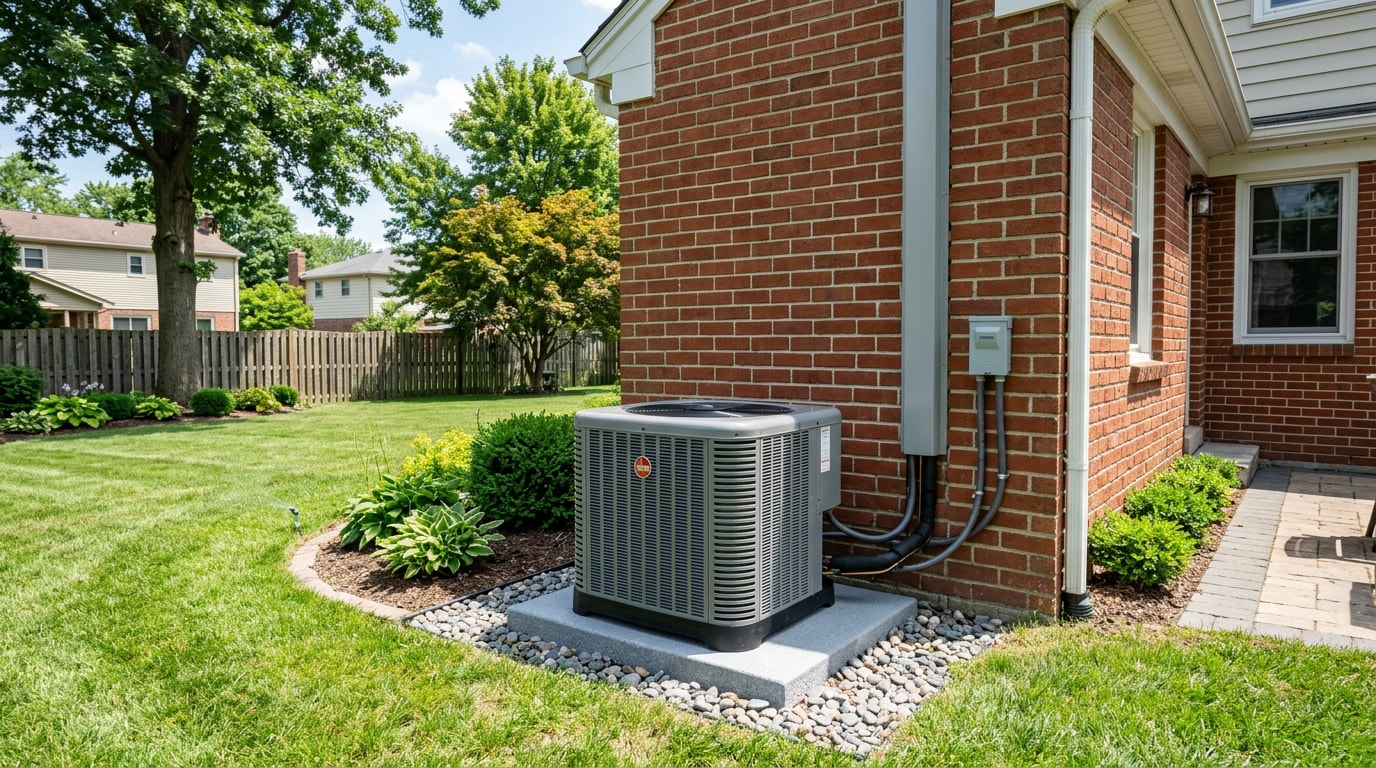
An AC condenser not turning on in Lee's Summit, MO usually traces back to one of a handful of specific, identifiable problems, not a dead system. The outdoor unit can sit silent for reasons as simple as a tripped breaker or as serious as a failed compressor. Here's how to tell which one you're facing before you decide whether to grab a flashlight or call for repair.
Why Is Your AC Condenser Not Turning On? Common Causes
Kansas City-area summers run hot and humid, and that combination pushes outdoor units harder than milder climates do. Most cases of an AC condenser not turning on trace back to a power issue, a thermostat problem, a failing electrical component, or something physically blocking the unit.
Before digging into each cause, here's a quick-reference based on what you actually hear or see at the outdoor unit:
| What You Notice at the Condenser | Likely Cause | Next Step |
|---|---|---|
| Steady hum, no fan movement | Failed or weak capacitor | Shut it off; have a tech test the capacitor |
| Repeated clicking, no hum | Worn or dirty contactor | Inspect contactor for pitting or debris |
| Complete silence, no sound at all | Power, breaker, or thermostat issue | Check breaker, disconnect switch, thermostat |
| Fan spins, compressor stays silent | Capacitor or compressor fault | Professional diagnosis needed |
| Unit shuts off only mid-afternoon on hot days | Demand-response cycling or overheating | Check for a utility cycling device; clear airflow |
Tripped Circuit Breaker, Blown Fuse, or Disconnect Switch Off
Start with the simplest explanations before assuming the worst. Open your home's electrical panel and look for a breaker sitting in the middle position, neither fully "on" nor fully "off." That middle position signals a tripped breaker rather than a clean shutoff. A blown fuse, by contrast, often shows a visibly broken filament or a cloudy, darkened window if your panel still uses fuses.
Don't overlook the disconnect switch, a small metal box mounted on or near the condenser itself. It's easy to forget, but a disconnect that's been bumped or deliberately flipped off during yard work or storm prep will keep a perfectly healthy unit from starting.
If you reset the breaker and it trips again immediately, stop resetting it. A breaker that won't stay on is protecting you from a short circuit or overload somewhere in the system. Repeatedly resetting it can create a real fire risk. NFPA's home electrical safety guidance specifically recommends calling a qualified electrician when fuses or breakers trip frequently.
Thermostat Not Set Correctly
Sometimes the condenser isn't broken. It was simply never told to run. Check that the thermostat is set to "cool," not "fan" or "off," and confirm the target temperature is set below the current room temperature.
Dead or weak batteries are another frequent, overlooked cause of a thermostat that won't call for cooling. A thermostat with a dim or blank display can't send a signal to the outdoor unit at all. Older, non-digital thermostats can also drift out of calibration over time, reading the room as cooler than it actually is.
If your settings all look correct and the display is lit, but the system still won't engage, the problem has likely moved past a simple fix and into the electrical components covered next.
Your Condenser May Be Mid-Cycle From an Evergy Energy Savings Event
This one catches a lot of Lee's Summit homeowners off guard, and it's not something most AC repair articles mention. If you're enrolled in Evergy's Thermostat Program, your smart thermostat can automatically cycle your air conditioner off for short stretches during a declared Energy Savings Event, typically on the hottest weekday afternoons in summer.
These events usually last a few hours and the fan may keep running even while the compressor pauses, which can look exactly like a condenser that "won't start." Before assuming a mechanical failure on a brutally hot afternoon, check your thermostat app for an active savings event or opt-out notice.
Failed or Weak Capacitor
A failed capacitor is one of the most common reasons an AC condenser won't start, and it typically announces itself through sound rather than silence. The capacitor stores an electrical charge and releases it to give the compressor and fan motor the jolt they need to start spinning. When it weakens, that jolt disappears.
In our service calls around Lee's Summit, a weak or failed capacitor is the single most common no-start diagnosis we make, especially after a stretch of 95-degree days that push the unit to its limit.
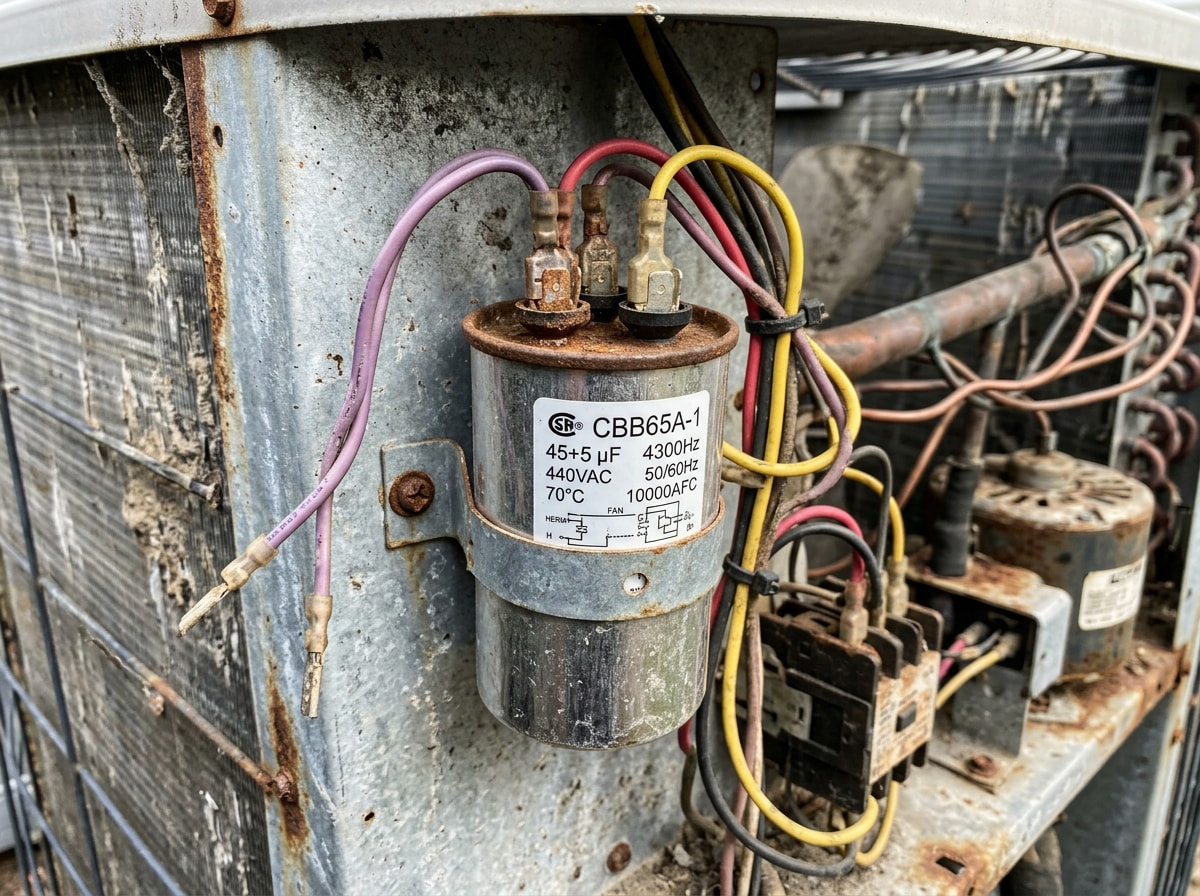
This self-check can save you a wasted service call by ruling out the wrong component before anyone arrives. That said, capacitor replacement is not a DIY project. Capacitors store an electrical charge that can remain dangerous even after the unit is powered off. OSHA's work-practice standard requires capacitors to be discharged before anyone works near them, which is exactly why trained technicians treat this step as non-negotiable.
Worn or Faulty Contactor
The AC contactor is a relay switch that closes to send power to the compressor and condenser fan whenever the thermostat calls for cooling. Over thousands of cycles, the contacts inside can pit, burn, or corrode until they no longer close reliably, producing the repeated clicking sound mentioned in the table above.
Oddly enough, insects are a surprisingly common contactor killer. Ants and other small pests are drawn to the slight electrical current and can nest inside the contactor housing, physically jamming it open or closed. A contactor that won't close means the compressor never gets power, even though the rest of the system looks ready to run.
Airflow Blockage Around the Condenser
A condenser surrounded by debris can overheat and shut itself down as a protective measure. Grass clippings, fallen leaves, cottonwood fluff, and overgrown shrubs all restrict the airflow the unit needs to release heat.
Keep at least two feet of clearance on all sides of the outdoor unit. If yours has been crowded by landscaping or buried under yard debris, clearing it is one of the few fixes on this list you can safely handle yourself.
Condensate Drain Line Clog (Safety Switch Trip)
A clogged condensate drain line can also stop a condenser from running. Many systems include a float switch that detects standing water in the drain pan and deliberately shuts the unit down to prevent water damage inside your home. If your condenser won't start and you've noticed water pooling near the indoor unit, a clogged drain is a likely cause.
If what you're actually seeing is ice on the indoor coil or lines rather than standing water, that's a different problem with its own set of causes. Our guide on why AC units freeze up in Lee's Summit walks through that scenario in detail.
Compressor Malfunction
A failed compressor is the most expensive cause of a non-starting condenser, and almost always the one homeowners hope it isn't. Because the compressor is the heart of the refrigeration cycle, failure here usually means the unit needs professional diagnosis and, in many cases, replacement. Our condenser unit repair service covers exactly this kind of diagnosis, from a simple relay fix to a full compressor assessment.
DIY Troubleshooting Steps Before Calling a Professional
Before scheduling a service call, it's worth running through a few safe, homeowner-level checks in order. A couple of these steps come with a clear warning to stop and wait for a licensed technician rather than push further.
How to Safely Inspect the Capacitor
Turn off power at the breaker first. Never work inside a condenser with the unit energized. Once power is confirmed off, remove the outer access panel and visually inspect the capacitor for obvious signs of trouble: a bulging or domed top, leaking oily residue, or visible corrosion around the terminals.
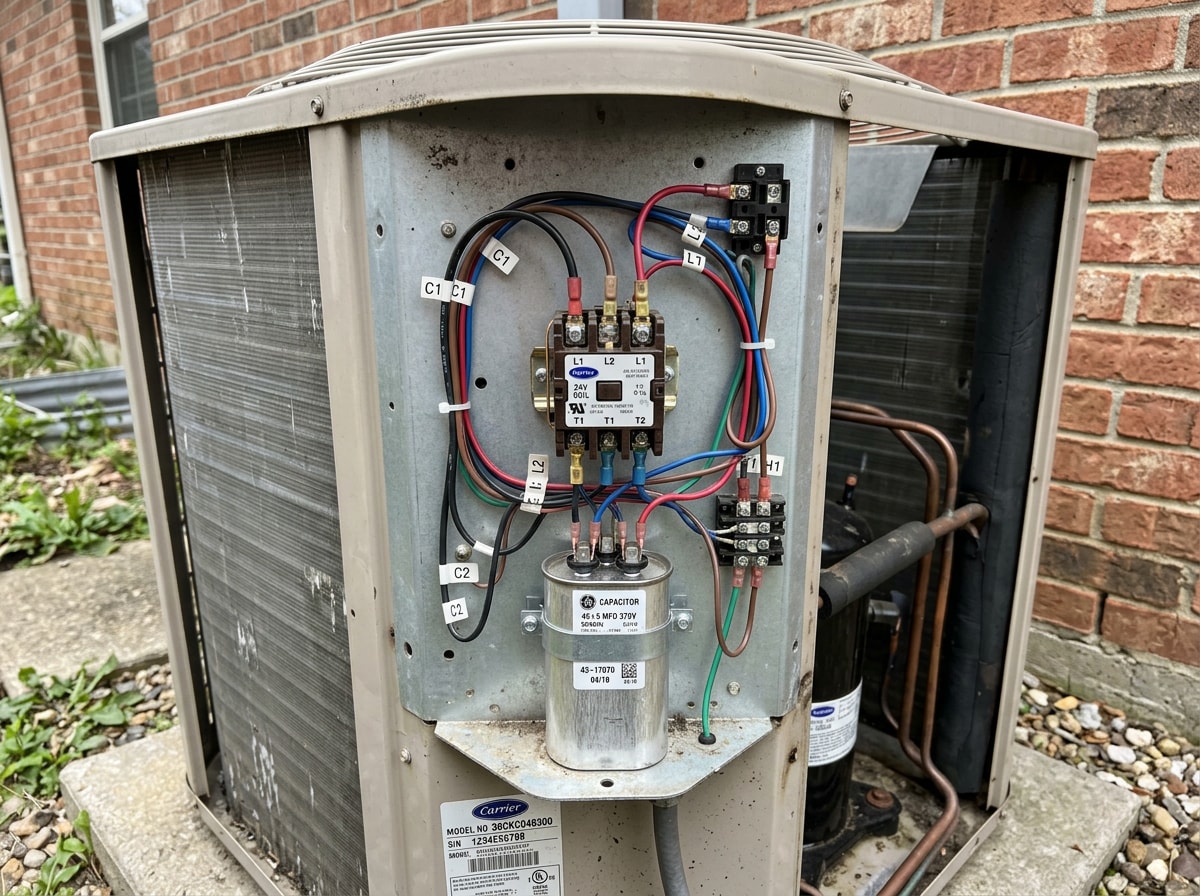
A visual check is where a homeowner's involvement should end. Confirming the capacitor's actual health requires a multimeter microfarad test, comparing the reading against the rated value printed on the capacitor's label. That test, along with safe capacitor replacement, is best left to a trained technician.
Examine the Condensing Unit for Visible Damage
With the power still off, take a slow look around the outside of the condensing unit itself. Bent fins on the coil restrict airflow and reduce cooling efficiency. Disconnected or chewed wiring, often from squirrels or rodents, can cut power to individual components without tripping the main breaker.
Rust or corrosion around the base or refrigerant lines can also signal a slow leak or age-related wear. None of these findings mean you should attempt a repair yourself, but knowing what you're looking at helps you describe the problem accurately when you call for service.
DIY vs. Professional Outside AC Unit Repair
Some fixes genuinely belong to the homeowner:
- Resetting a tripped breaker once
- Swapping thermostat batteries
- Clearing yard debris away from the unit
- Replacing a dirty air filter
These cost nothing but a few minutes and carry little risk. Everything involving the capacitor, contactor, internal wiring, refrigerant, or compressor crosses into licensed-technician territory. These components carry electrical or chemical hazards that aren't worth a DIY attempt, and refrigerant handling legally requires an EPA-certified technician regardless of who owns the equipment.
Knowing when to call an HVAC professional isn't about admitting defeat. It's about matching the repair to the actual risk involved. If you've worked through the safe checks above and the condenser still won't start, our licensed technicians handle air conditioner repair across the Lee's Summit area, typically with same-week availability during peak summer demand.
Preventive Maintenance Tips for Your Outside AC Unit
Many of the no-start problems above are preventable with routine upkeep. An annual tune-up catches a weakening capacitor or a dirty contactor before it fails outright, often during the exact week you need cooling most.
Cleaning the condenser coil, replacing filters on schedule, and keeping a two-foot clearance around the unit all reduce strain on the system. Given how humid Lee's Summit summers get, dirt and moisture build up on coils faster here than in drier climates, which makes regular cleaning more than just a nice-to-have.
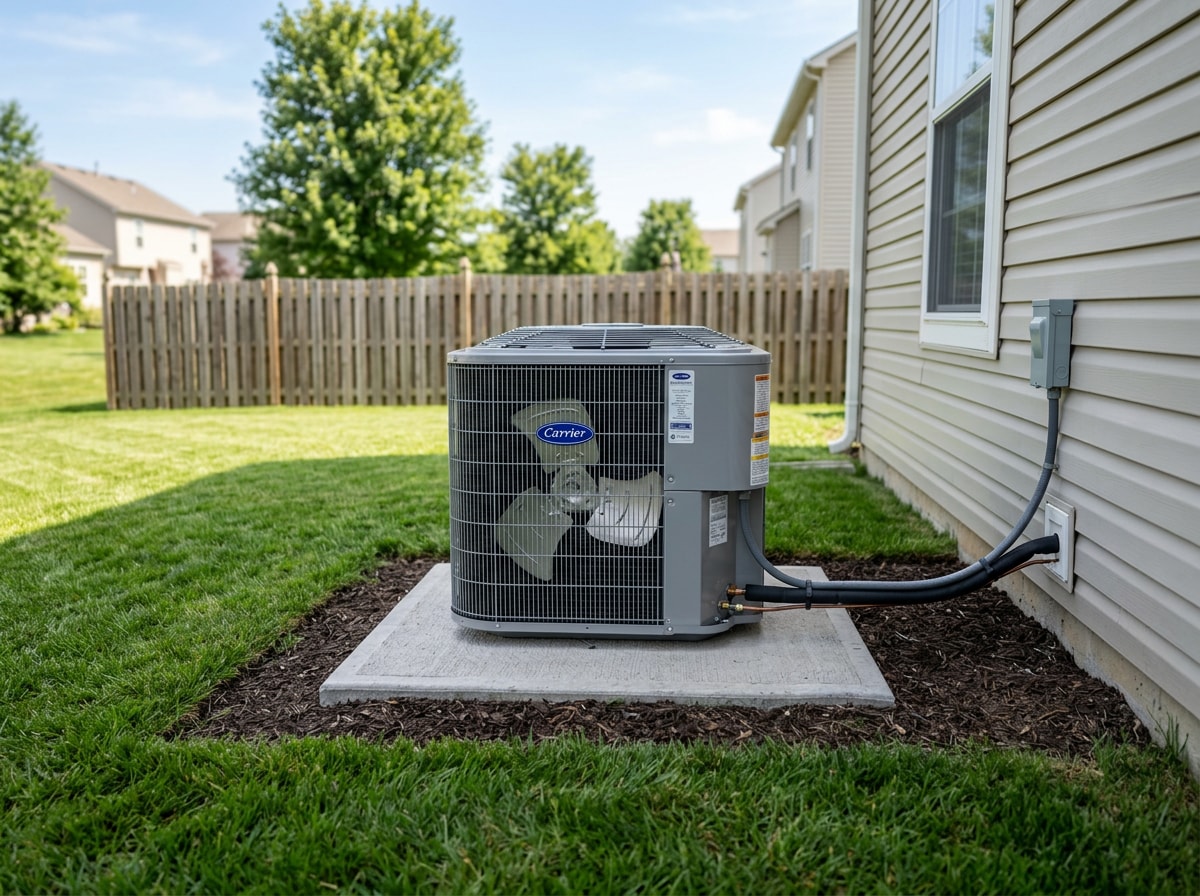
The U.S. Department of Energy's guidance on home cooling systems backs this up, recommending regular air conditioner maintenance as part of keeping a cooling system efficient. If you haven't scheduled a seasonal check, our AC maintenance and tune-up service outlines what a thorough visit includes, and you can get a free estimate before any work begins.
For homeowners comparing their options across the metro, Jackson County Comfort services condensers, furnaces, and full HVAC systems throughout the Kansas City area, not just one-off repairs.
FAQ
These are the questions Lee's Summit homeowners ask most often when their outdoor unit won't start.
Why Is My Outside AC Condenser Not Turning On?
An AC condenser not turning on is most often caused by a tripped breaker, an incorrect thermostat setting, or a failed capacitor. Less commonly, a bad contactor, blocked airflow, a clogged condensate drain, or compressor failure is to blame. Checking power and thermostat settings first rules out the easiest fixes before assuming a part has failed.
Why Does My Outside AC Unit Only Hum But Not Start?
A humming sound with no fan movement almost always points to a capacitor or contactor that can't deliver enough power to start the motor. It's tempting to ignore the hum since the unit is technically "running," but letting it continue can overheat and permanently damage the compressor motor. Shut the system off and have it inspected rather than letting it hum indefinitely.
How Do I Reset My AC Condenser?
Turn the breaker to the condenser off, wait about 30 seconds, then switch it back on. This single reset is generally safe and resolves minor electrical hiccups. If the unit trips again or won't start after one reset, stop resetting it and call a technician instead.
What Should I Do If My Outside AC Unit Keeps Tripping the Breaker?
A breaker that trips repeatedly usually signals a short circuit, an electrical overload, or a failing capacitor drawing too much current. Continuing to reset it won't fix the underlying issue and can pose a fire risk over time. Contact us to schedule service rather than keep flipping the switch.
Can Evergy's Energy Savings Program Make My Condenser Look Broken?
Yes. If you're enrolled in a smart thermostat demand-response program, your condenser's compressor can pause for part of an afternoon during a declared Energy Savings Event while the fan keeps running. Check your thermostat app for an active event before assuming the unit has failed.
How Much Does It Cost to Fix an AC Condenser That Won't Turn On?
It depends entirely on which component failed. Capacitors and contactors are among the least expensive parts to replace, while a compressor is the costliest repair and sometimes approaches the cost of a new outdoor unit. A diagnostic visit is the only way to know which category your repair falls into, which is why we recommend starting with a free estimate rather than guessing.