Reset furnace Kansas City, MO homeowners attempt most often happens the same way: the house goes cold, someone finds a small red button inside the blower compartment, and presses it without knowing why the furnace tripped in the first place. That button is a safety switch, not a fix. Press it correctly and you might be warm again in minutes. Press it blindly and you could be masking a problem that gets worse, or more dangerous, by morning.
This guide walks through the exact reset steps for gas and electric furnaces, the most common reasons a furnace trips in the first place, and the point where troubleshooting should stop and a call to a technician should start.
How to Reset a Furnace in Kansas City, MO: Step-by-Step
Gas and electric furnaces share the same basic idea, a safety switch that cuts power when something isn't right, but the steps differ because gas systems add a combustion and fuel-line element electric units don't have. Work through the correct list below for your system type.
How to Reset a Gas Furnace
- Turn off power to the furnace at the service switch near the unit or at the breaker panel.
- If you suspect the pilot light or ignition system is the problem, shut off the gas valve too before going further.
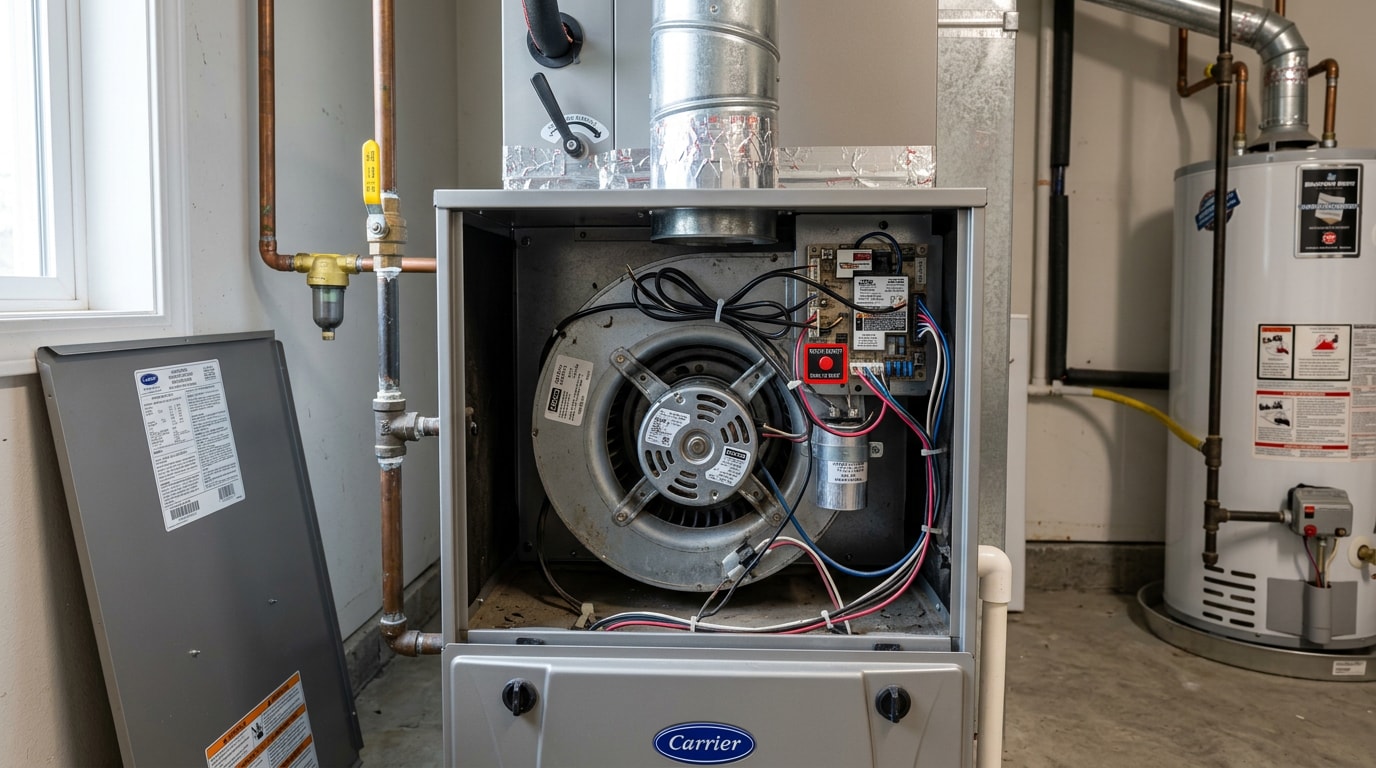
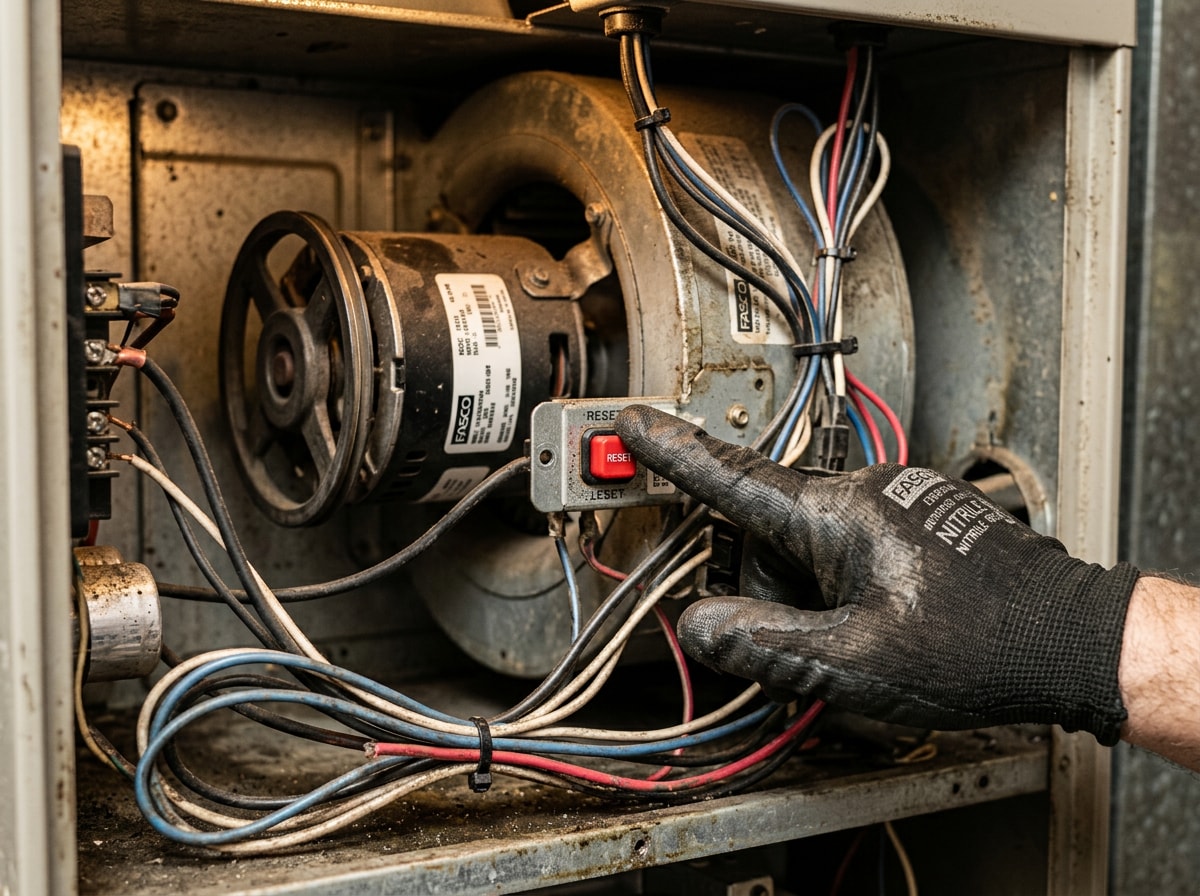
- Locate the red or yellow reset button, usually inside the blower compartment or near the control board.
- Press and hold the button for about 30 seconds, then release it.
- Restore power and gas supply, then watch the startup cycle.
Older furnaces with a standing pilot light often need the pilot relit by hand after a reset, following the instructions printed on the unit's access panel. Newer furnaces with electronic or hot-surface ignition relight automatically once power is restored. No match or manual step required.
One rule overrides everything above: if you smell gas at any point, stop. Don't press the reset button, don't flip switches, and don't try to find the leak yourself. Leave the house and call your gas utility or 911 from outside. The American Gas Association advises leaving the building immediately and avoiding anything that could spark, including light switches and phones, until the area is declared safe.
How to Reset an Electric Furnace
- Turn off power at the unit's switch or the breaker before touching the cabinet.
- Remove the access panel and locate the reset button, usually near the blower motor.
- Press and hold it for the interval listed in your owner's manual (commonly around 30 seconds).
- Replace the panel and restore power.
- Watch the blower start within a minute or two, then check for warm air at the vents.
If the blower runs but no heat follows, that points to a failing heating element, not something a reset button can solve.
| Gas Furnace Reset | Electric Furnace Reset | |
|---|---|---|
| Extra risk | Gas valve and pilot/ignition | None (electrical only) |
| Stop-and-call trigger | Any gas odor | Repeated trips with no heat |
| Who can usually attempt it | Homeowner, with caution | Homeowner |
| When a pro is required | Pilot won't relight, smells gas, or trips again | Blower runs but no heat follows |
Why Furnaces Trip the Reset Switch
A reset button exists because something inside the furnace triggered a safety shutoff. Before pressing it again, it helps to know what's actually causing the trip.
Most tripped switches trace back to one of these:
- Thermostat set wrong or a dead battery causing a blank or unresponsive display.
- Clogged air filter restricting airflow and forcing the blower to overheat. ENERGY STAR recommends inspecting filters monthly and changing them at least every three months, more often with pets or allergy concerns in the house.
- Pilot light or ignition issues on gas models.
- A failing heating element on electric models.
In our service calls across Jackson County, the single most common cause of a repeat trip isn't a bad control board. It's a return-air filter packed with dust or pet hair in an older home where the duct run already restricts airflow more than newer construction does. A clean filter check costs nothing and should always come before a second reset attempt. If filter changes and thermostat checks don't solve it, a furnace maintenance visit can catch wear before it causes a full shutdown.
Unusual Noises: What They Mean
The type of sound matters more than the volume.
- Banging or clanging: usually a loose or broken internal part, a cracked heat exchanger, or a failing igniter. This needs a technician, not another reset.
- Rattling: often just a loose panel or vibrating screw, something a homeowner can sometimes tighten safely.
If a reset temporarily quiets a banging furnace, treat that as a delay, not a solution.
What to Do If the Furnace Still Won't Reset
If pressing the button doesn't bring the furnace back, work through these checks before calling for help:
- Check the home's electrical panel. A tripped breaker feeding the furnace is common and easy to fix.
- Confirm the thermostat is still calling for heat.
- Check that the filter isn't fully blocked.
- Make sure the furnace's power switch (it looks like a light switch near the unit) hasn't been bumped off.
Most manufacturers and technicians advise against pressing a reset button more than twice in a row. If it trips a third time, that's the system telling you there's an underlying fault, low airflow, a failing part, or a safety lockout, not a random glitch that will eventually clear on its own.
When to Call a Professional for Furnace Repair
Some situations call for a technician instead of another attempt at the button:
- A burning smell or visible smoke
- Water pooling near the unit
- A reset button that trips repeatedly
- A furnace nearing the end of its typical 15- to 20-year service life
Malfunctioning gas furnaces are a recognized source of carbon monoxide exposure. The CDC notes that the most common symptoms, headache, dizziness, weakness, and confusion, are often mistaken for the flu, especially in a closed-up winter home. If you notice those symptoms alongside heating problems, get outside and call for help immediately.
For anything beyond a clean, one-time reset, a technician familiar with Kansas City's housing stock and common regional furnace models can diagnose the root cause instead of just resetting the symptom. Our team at Jackson County Comfort handles furnace repair calls throughout Kansas City, MO and the surrounding area, and offers emergency heating repair when a furnace won't come back at all. If the unit is older and repairs keep piling up, it's worth asking about HVAC system replacement instead of chasing another reset. For routine upkeep that catches these issues before they cause a shutdown, see what's covered in heating system maintenance in Kansas City, MO.
Ready to stop guessing? Get a Free Estimate and we'll send a licensed technician to diagnose it properly.
FAQ
Why does my furnace keep tripping the reset button?
It usually signals overheating, restricted airflow, or a fuel supply issue, not a one-time glitch. The switch is doing its job by shutting the system down safely each time.
Where is the reset button located on a furnace?
Typically inside the blower compartment, near the blower motor or control board. Look for a small red or yellow button, often recessed slightly into the housing.
Can a power outage cause my furnace to need a reset?
Yes. Power surges or outages can trip safety switches or scramble electronic controls, so a reset after power outage is often needed once electricity comes back on.
How many times can I safely press the furnace reset button?
No more than twice in succession. If it trips again after that, stop resetting it and call a technician instead.
What's the difference between resetting a gas furnace and an electric furnace?
A gas furnace reset involves an extra fuel and ignition check, including the pilot light on older units. An electric furnace reset skips the gas steps entirely and only deals with power and the blower motor.
Do all furnaces have a reset button?
Most do, but some modern electric blower motors shut down electronically and report fault codes instead of using a physical reset button. If you can't find one, check your owner's manual or contact us for help identifying your system.