
If you're researching oil furnace installation in Olathe, KS, you're probably dealing with an aging system or a home that was never hooked up to natural gas. Oil heat is rare in this part of Johnson County, but it's still a real option, and the pricing, sizing rules, and install steps work differently than a standard gas furnace swap. Here's what actually drives your quote in 2026, plus what to ask before you hire anyone.
How Much Does Oil Furnace Installation Cost in Olathe, KS in 2026?
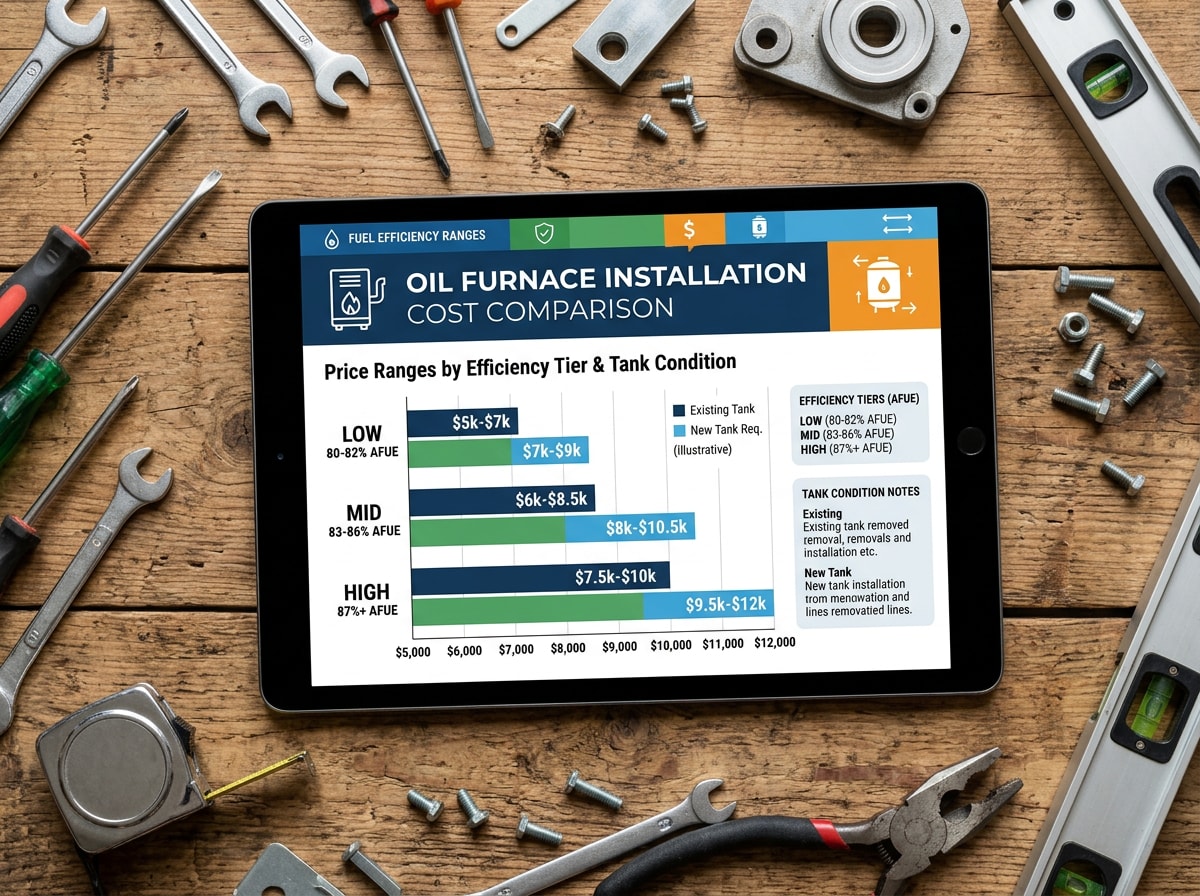
Oil furnace installation typically costs between $4,000 and $13,500 in 2026, depending on furnace size, AFUE efficiency rating, and whether ductwork, a chimney liner, or tank replacement is needed. Most Olathe homeowners replacing an older oil system should budget $6,000 to $9,500 for a complete, code-compliant installation under typical conditions.
National cost guides vary on the exact range. Some cite $4,000 to $10,000; others push as high as $13,500 once a chimney liner and tank are included. The difference usually comes down to scope: a basic furnace swap with a usable existing tank lands on the lower end, while a project that also replaces the tank or re-vents through a new liner pushes toward the top.
Oil equipment costs more to install than gas, partly because fewer local technicians specialize in it. That scarcity is exactly why this remains a niche but persistent search in Olathe: a quick look at who actually services oil systems locally turns up mostly general furnace-replacement pages, not oil specialists, which tells you vetting experience matters more here than on a typical gas furnace job. The rest of this guide breaks down cost by efficiency, size, labor, and tank condition, then covers hiring tips and FAQs.
If you want a number specific to your house rather than a range, our furnace installation team can walk the property and get you a free estimate before you commit to anything.
What Is an Oil Furnace?
An oil furnace, or oil-fired furnace, is a forced-air heating system that burns heating oil stored in an on-site tank to produce warm air distributed through ductwork. It's most common in older homes, rural properties, and areas without access to a natural gas main.
Instead of pulling fuel from a utility line, an oil furnace draws from a dedicated heating oil system: a tank, fuel line, and burner assembly that gets refilled periodically by a delivery service. This setup makes oil furnaces self-contained, but it also means homeowners manage fuel supply themselves rather than relying on a gas company meter.
Pros and Cons of an Oil Furnace
Oil furnaces deliver strong heat output and don't depend on a utility hookup, but they come with fuel-price swings and more maintenance than gas systems. Here's how oil stacks up against the fuels most commonly used in Kansas homes.
| Factor | Heating Oil | Natural Gas | Propane |
|---|---|---|---|
| Typical Midwest fuel cost | Higher, volatile pricing | Lowest, stable | Moderate to high |
| Heat output per unit | High BTU per gallon | Lower per unit, cheaper overall | High, comparable to oil |
| Infrastructure needed | On-site tank, deliveries | Utility gas line | On-site tank, deliveries |
| Maintenance needs | Annual tune-up, tank checks | Lower maintenance | Annual tune-up, tank checks |
| Best fit | No gas access, cold climates | Homes on existing gas lines | No gas access, rural areas |
The biggest advantage of oil heat is independence from a utility company, which matters if a property sits outside Olathe's gas infrastructure. The tradeoff is managing deliveries, tank upkeep, and oil prices that shift more than regulated natural gas rates. According to Trane's technical overview of oil furnaces, oil furnaces burn more heat per BTU than gas but typically fall between 80 and 90 percent AFUE, compared with gas furnaces that can reach 80 to 97 percent.
Oil Furnace Installation Cost Factors
Several variables shape your final quote, and most have nothing to do with the brand of furnace you choose. The four biggest movers are efficiency rating, home size, labor, and tank or venting condition.
Cost by Efficiency (AFUE Rating)
Standard-efficiency oil furnaces (80 to 83% AFUE) typically cost $4,000 to $7,500 installed, while higher-efficiency models (85 to 90% AFUE) run $7,500 to $13,500. The higher sticker price usually pays back through lower annual fuel use.
Unlike gas furnaces, which can reach 96 to 98% AFUE, oil furnaces generally cap out in the high 80s to around 90%. There's no condensing oil furnace on the market the way there is for gas. Oil combustion produces more byproducts that limit how efficiently the heat exchanger can extract energy, which is a known physical limitation, not a manufacturer shortfall. For federal efficiency standards and how AFUE translates to lifetime savings, see the Department of Energy's guidance on purchasing energy-efficient furnaces.
Cost by Home Size (BTU Capacity)
Furnace size is measured in BTUs, and an undersized or oversized unit wastes money either way. As a rough guide:
- 1,200 to 1,600 sq. ft.: roughly 60,000 to 80,000 BTU, about $4,500 to $7,000 installed
- 1,600 to 2,200 sq. ft.: roughly 80,000 to 100,000 BTU, about $5,500 to $9,000 installed
- 2,200 to 3,000 sq. ft.: roughly 100,000 to 125,000 BTU, about $7,000 to $11,500 installed
These figures are starting points, not guarantees. A proper sizing calculation accounts for insulation levels, ceiling height, window count, and local climate data. Square footage alone can lead to an incorrectly sized furnace.
Labor Cost
HVAC labor rates for oil furnace installation generally run $75 to $150 per hour, with most installations taking 8 to 15 hours of total labor across one to two days. Simpler swaps land on the lower end.
Costs climb when installers encounter tight mechanical room access, outdated ductwork, or fuel line work that requires rerouting. A technician experienced with oil systems, not just gas, can often spot these issues during the initial estimate rather than mid-job.
Oil Tank Replacement Cost
Oil tank replacement is a line item that simply doesn't exist on a gas or electric furnace quote, and it can add meaningfully to your total. Above-ground tanks typically cost $1,000 to $3,000 installed, while underground tank removal and replacement can run $3,000 to $10,000 or more, depending on excavation and disposal requirements.
Underground tanks carry added risk. A leaking tank can contaminate soil and groundwater, which is exactly why federal rules exist for commercially operated underground tanks, though the EPA notes that heating oil tanks used on-site are generally exempt from federal UST regulation, even though state or local rules can still apply. If your home has an older or unused tank, have it inspected before, not after, furnace installation.
Chimney Liner Cost
This is the cost most quotes leave out entirely. Many oil furnaces vent through a masonry chimney, and if that chimney was built for an older, less efficient unit, it may need a new liner sized to the new furnace's venting requirements. Expect to add roughly $1,500 to $4,000 for liner work, more if the chimney needs structural repair first. Ask for this explicitly during your estimate so it doesn't become a surprise change order mid-project.
Hiring an Oil Furnace Installer
Not every HVAC company in the Kansas City area stocks oil equipment or trains technicians on oil-specific systems, so vetting matters more here than with a standard gas furnace swap. On our own service calls across Johnson County, we still find working oil furnaces in older farmhouses and acreages that sit just outside Olathe's natural gas footprint, and those jobs almost always need more than a straight equipment swap.
Before signing a contract, ask a prospective installer:
- How many oil furnace installations have you completed in the past year?
- What's the realistic installation timeline, including any tank or chimney work?
- Who handles debris removal and old equipment disposal?
- Will the work meet current local and Kansas mechanical code requirements?
- Is a backup heat option available if the installation spans multiple days?
Technicians who hold training through the National Oilheat Research Alliance typically have more hands-on experience with oil-specific burner tuning and safety checks than a general HVAC installer. If you're weighing a straight replacement against a bigger change, our heating system installation and HVAC system replacement pages cover both paths. If you're in Johnson County, check our Olathe service area page to confirm coverage and request a local estimate.
So, Is an Oil Furnace Worth the Cost?
The answer depends on whether gas access exists at your property. If it doesn't, oil is often still the most practical choice despite higher running costs. Looking at total cost of ownership over time makes this clearer than a simple yes-or-no.
| Oil Furnace | Natural Gas Furnace | Heat Pump | |
|---|---|---|---|
| Install cost | $6,000–$9,500 | $4,000–$7,500 | $5,000–$12,000 |
| Est. annual fuel cost | $1,800–$2,800 | $800–$1,200 | $900–$1,500 |
| 15-year fuel total | $27,000–$42,000 | $12,000–$18,000 | $13,500–$22,500 |
| 15-year total cost | $33,000–$51,500 | $16,000–$25,500 | $18,500–$34,500 |
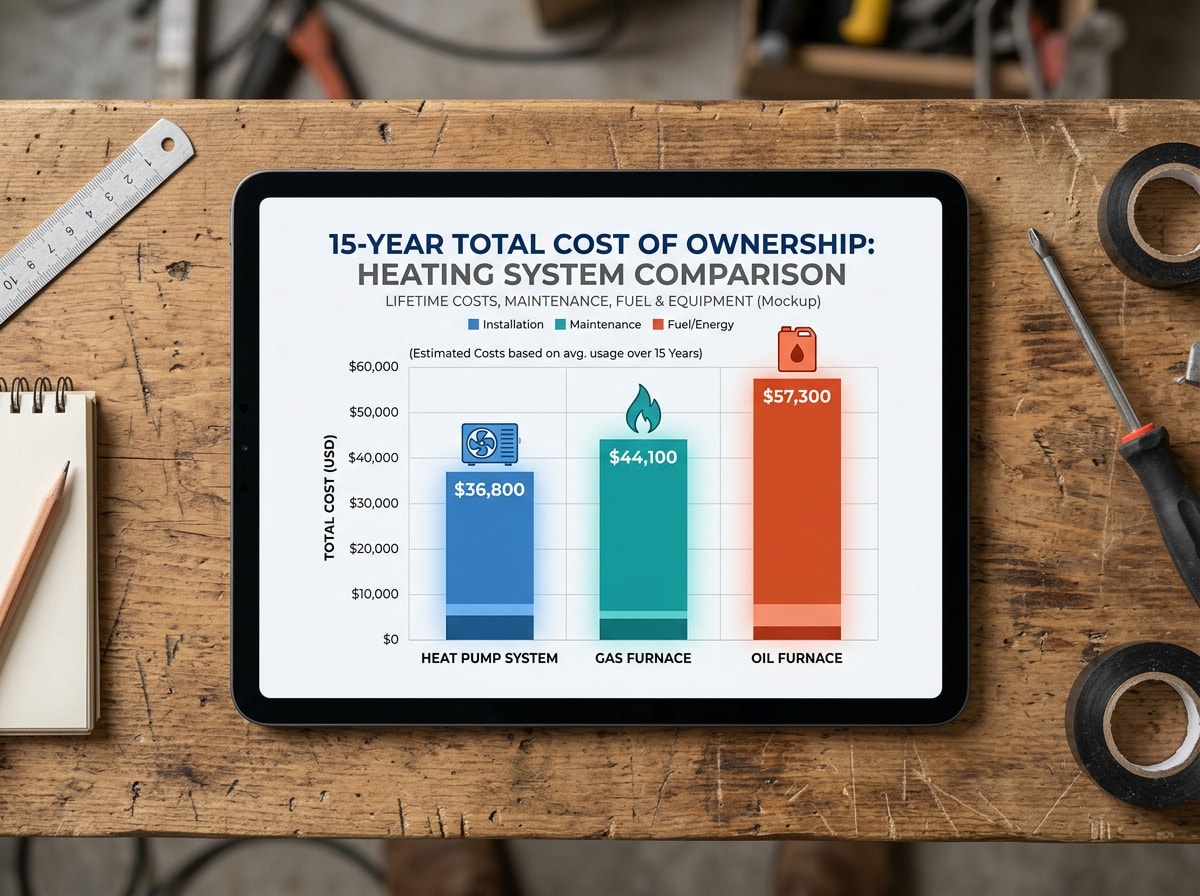
These are planning estimates, and actual fuel costs shift with market pricing and usage habits. Still, the pattern holds: oil heat costs more to run long-term than gas or an electric heat pump, but for homes without a gas line, it often remains more practical than a major electrical and insulation overhaul needed for cold-climate heat pump efficiency. If your home has in-floor radiant alternatives in mind instead, our floor heating system guide for Olathe homeowners walks through that option too. For your specific setup, reach out for a free estimate and we'll walk through real numbers for your home.
FAQ
How Much Should I Expect to Spend on a New Oil Furnace?
Most homeowners spend $4,000 to $13,500 for a new oil furnace installation, with $6,000 to $9,500 typical for a straightforward replacement. Olathe-area quotes can run higher when tank work, a chimney liner, or ductwork updates are needed, since fewer local contractors specialize in oil systems.
What Is the Average Lifespan of an Oil Furnace?
A well-maintained oil furnace typically lasts 15 to 25 years, similar to a gas furnace. Annual tune-ups, timely filter changes, and keeping the tank and fuel lines in good condition all help a unit reach the higher end of that range.
Is It Cheaper to Heat With Oil or Gas?
Natural gas is almost always cheaper to run than oil, as shown in the 15-year cost-of-ownership comparison above. Oil remains the more practical choice mainly for homes that lack access to a gas line, not because it's the lower-cost fuel.
Does an Oil Furnace Need a Chimney Liner?
Often, yes, if it vents through an older masonry chimney. A liner sized for the new furnace keeps combustion byproducts venting safely and prevents moisture damage inside the chimney. Ask any installer to confirm this during the on-site estimate, not after the contract is signed.
Can I Convert an Oil Furnace to Gas?
Only if a gas line is accessible near your property. Conversion typically costs more upfront than a straight oil-to-oil swap because it involves running a new gas line, changing the venting, and sometimes updating the meter or service. It's worth pricing out both options side by side before deciding.
How Long Does Oil Furnace Installation Take?
Most installations take 8 to 15 hours of labor, completed in one to two days. Add time if the job includes a new tank, a chimney liner, or significant ductwork changes.
Is an Oil Furnace Safer Than a Gas Furnace?
Both can produce carbon monoxide if combustion isn't complete, so working carbon monoxide detectors are essential regardless of fuel type. Oil leaks are often easier to notice because of the fuel's odor, but that's not a substitute for proper venting, annual maintenance, and code-compliant installation.
About the Author
Derek Holloway is a licensed HVAC installer and lead technician at Jackson County Comfort, where he's handled furnace, heat pump, and occasional oil-to-gas conversion projects across Johnson County and the greater Kansas City metro for over a decade. Have questions specific to your home? Contact our team for a free, no-pressure estimate.