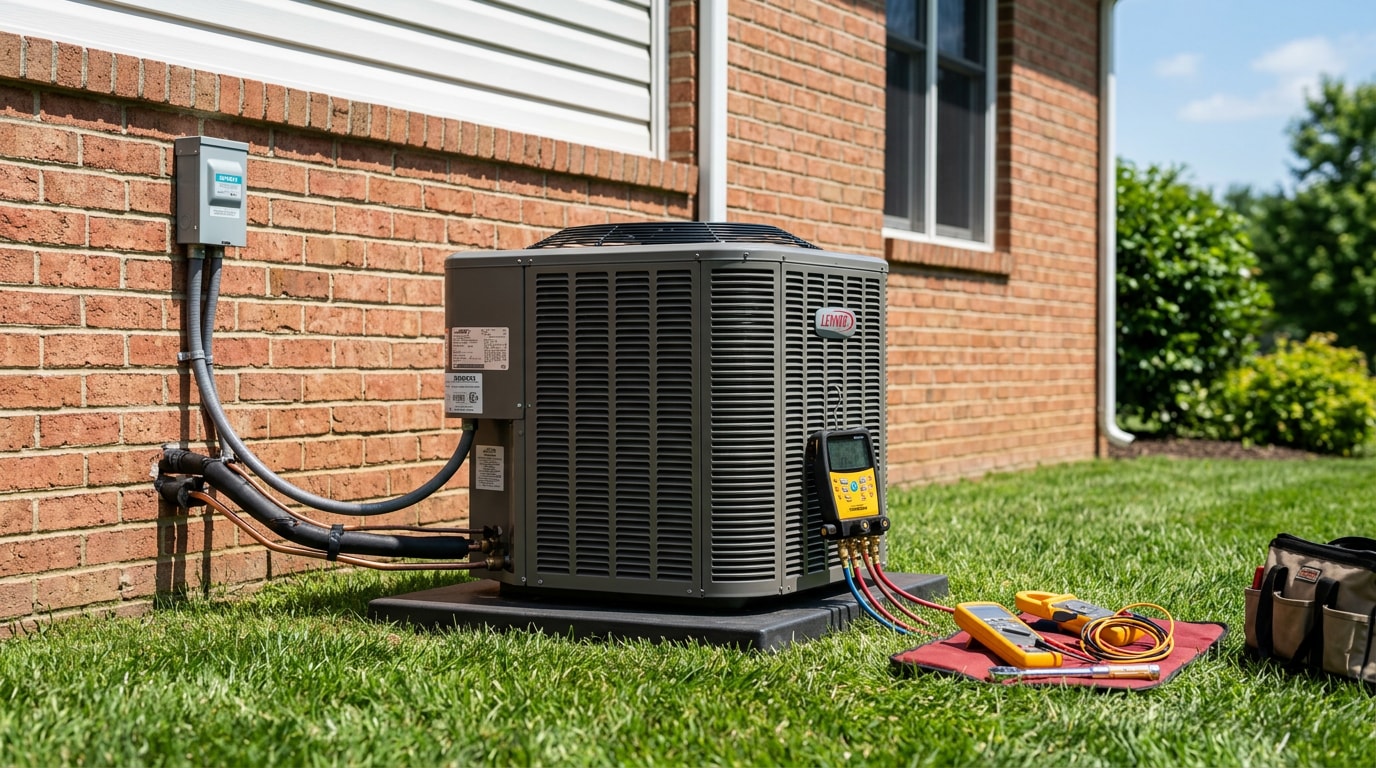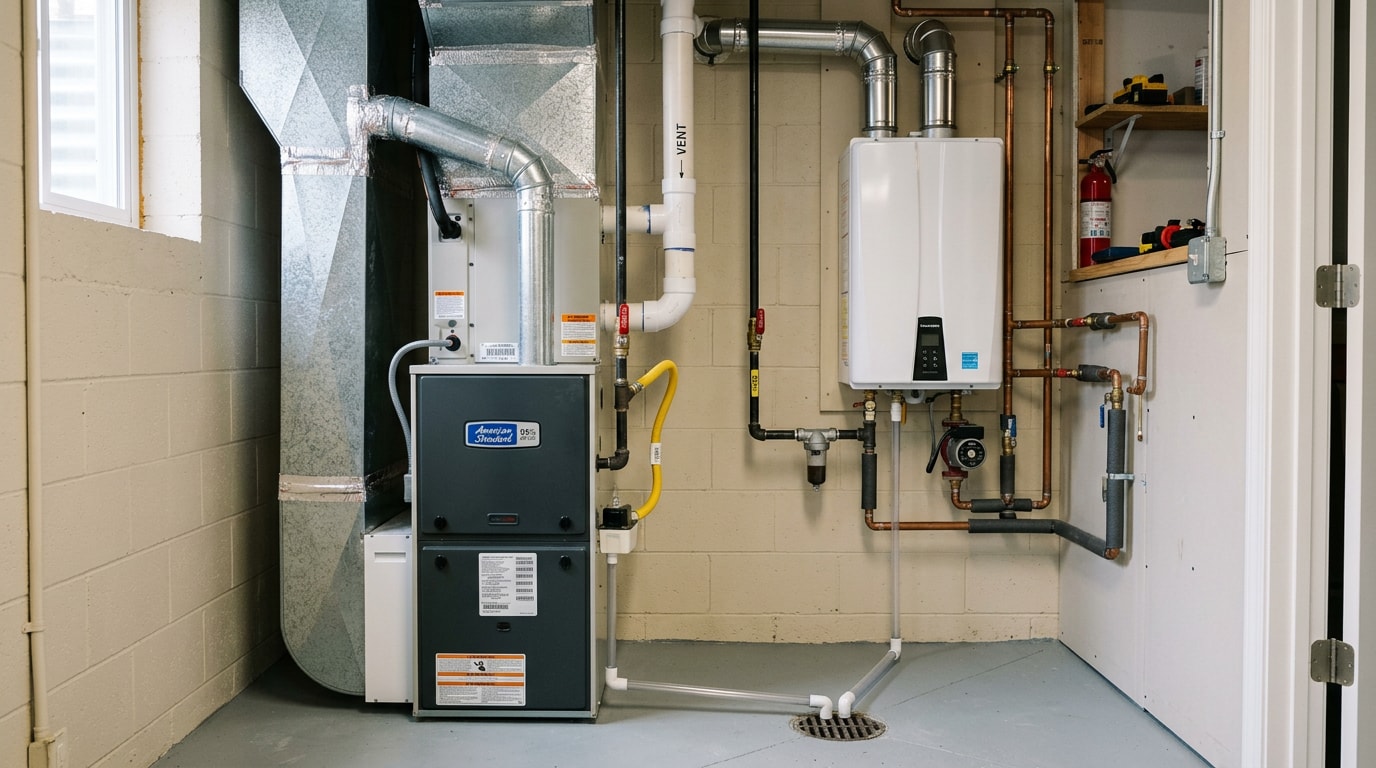
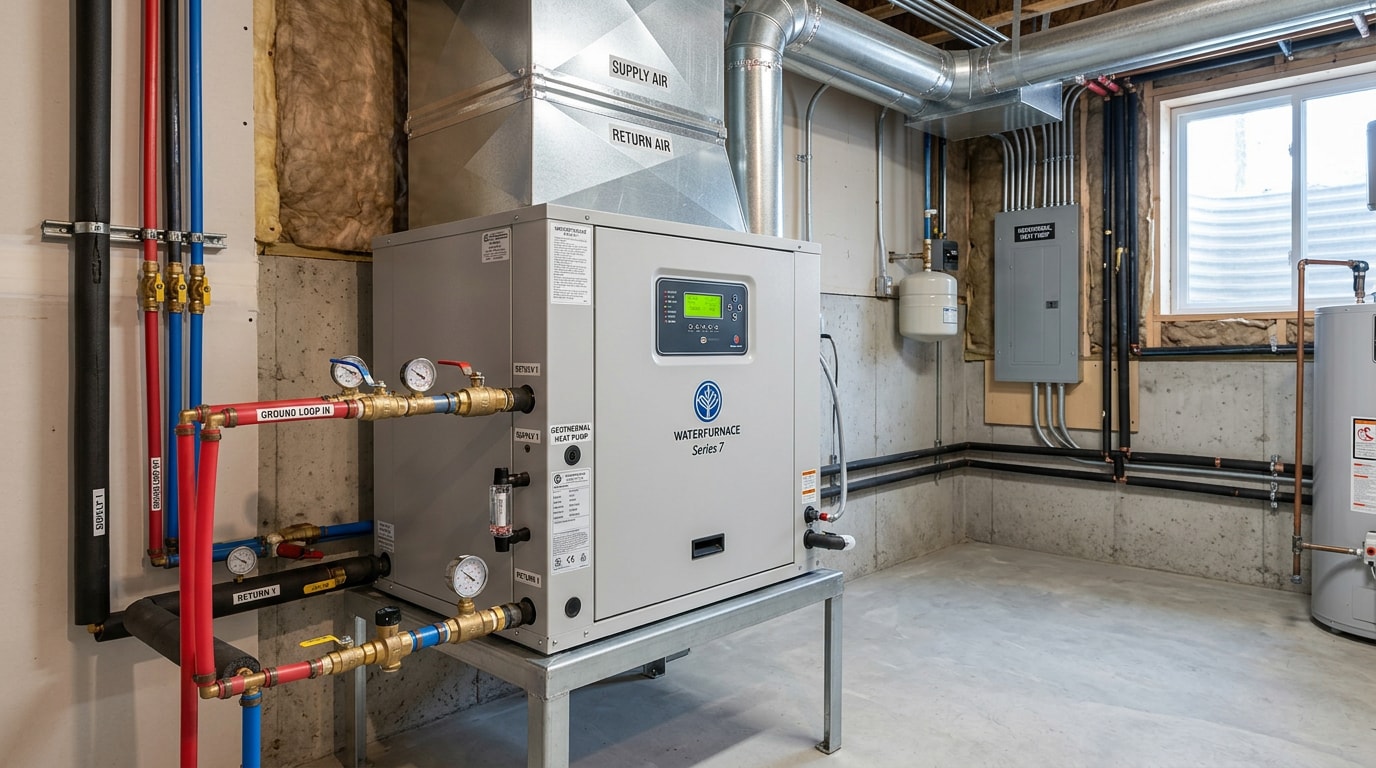
Geothermal air conditioning in Overland Park, KS works by moving heat into and out of the ground instead of burning fuel or relying on an outdoor compressor exposed to summer heat. That's a different approach than the furnace-and-AC setup running in most neighborhoods here, and it changes the math on upfront cost, monthly bills, and what incentives actually apply in 2026. Here's what to check before you request a quote.
How Geothermal Air Conditioning Works in an Overland Park Home
A geothermal system circulates fluid through a buried loop of piping. In winter, that fluid absorbs heat stored underground and carries it inside. In summer, the process reverses, and heat from your house gets released into the ground. Geothermal heat pumps transfer heat between your house and the ground or a nearby water source, and they cost more to install but have low operating costs because they take advantage of relatively constant ground or water temperatures.
That distinction matters more than it sounds. A furnace creates heat through combustion. A geothermal system simply relocates heat that already exists underground, using a ground source heat pump and electricity rather than gas or oil. If you're comparing that to a standard split system, our HVAC contractor services page breaks down how the equipment differs.
Types of Geothermal Loop Systems
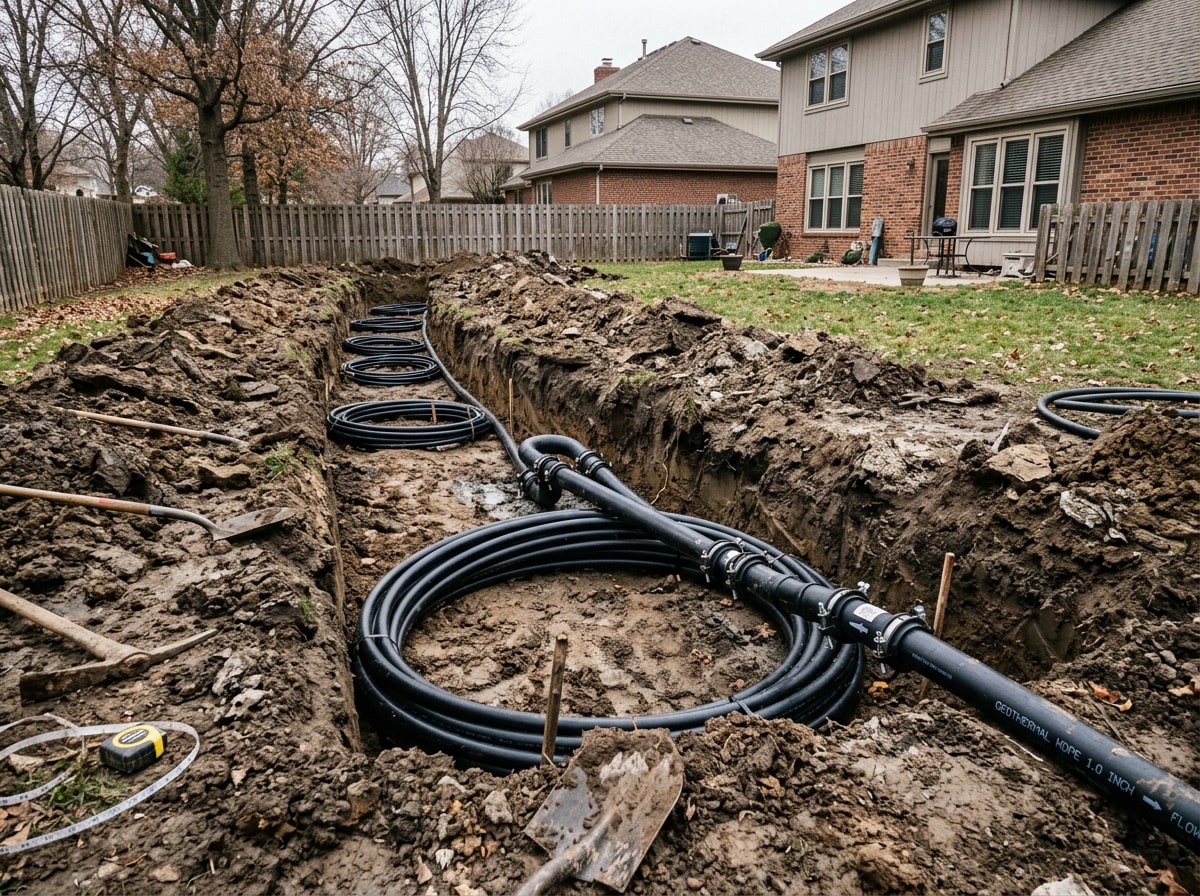
A geothermal system uses one of three loop configurations, chosen based on yard space, soil type, and whether the property has access to a well or pond:
- Horizontal loops are buried several feet down across a wide area. They cost less to install where lot size allows, and most suburban Overland Park yards accommodate them without much trouble.
- Vertical loops go much deeper and suit smaller lots since they need less surface area to work.
- Open-loop systems draw water from an on-site well or pond, circulate it once, and return it. This can be efficient but depends on local water rights and well capacity.
A contractor evaluating your property will walk the yard and tell you which configuration actually fits before anyone talks pricing.
Why Overland Park's Climate and Soil Work in Geothermal's Favor
Geothermal heat pumps, also known as ground-source heat pumps, take advantage of constant underground temperatures to efficiently exchange temperatures, heating homes in the winter and cooling homes in the summer. That stability is the entire reason the technology works, and it holds true regardless of whether it's 10 degrees or 100 degrees at the surface.
Soil conditions across the Kansas City metro generally support that heat exchange. The Kansas Geological Survey has studied geothermal heat pump potential across the state, noting that these systems don't rely on deep geothermal heat at all, just the shallow ground's comparatively steady temperature a few feet down. A proper site assessment still matters, though. It accounts for soil composition, moisture content, and available lot size before anyone settles on a loop type.
Geothermal Efficiency: How Much Can You Really Save
Geothermal systems typically move three to five times more energy than they consume, which is why they're often described as 300% to 500% efficient. Geothermal heat pumps can reduce energy use by 30% to 60%, control humidity, and fit in a wide variety of homes, and compared to other types of heat pumps, they can also be used in more extreme climates. A high-efficiency furnace, by comparison, rarely tops out anywhere close to that.
For a typical Overland Park home, that gap often shows up as noticeably lower monthly heating and cooling bills, though the exact number depends on your home's size, insulation, and the age of the system you're replacing. Geothermal units also run quietly since there's no outdoor compressor exposed to weather, and system life is estimated at 25 years for the inside components and 50-plus years for the ground loop. If you're weighing this against a standard install, see our heat pump installation page, or compare ongoing upkeep on our Maintenance Plan page.
Geothermal Heat Pump vs. Air-Source Heat Pump
Both systems move heat rather than generate it, but they pull that heat from different sources, which affects performance, equipment location, and cost.
| Factor | Ground Source Heat Pump | Air-Source Heat Pump |
|---|---|---|
| Heat exchange medium | Underground loop/fluid | Outdoor air |
| Cold-weather performance | Stays consistent year-round | Drops as outdoor temps fall |
| Equipment exposure | Indoor unit only | Outdoor unit exposed to weather |
| Typical efficiency | 300%-500% | 200%-300% (varies by model) |
| Typical install cost | Higher upfront | Lower upfront |
Air-source efficiency tends to decline on the coldest Kansas nights, while a ground source unit keeps pulling from stable underground temperatures regardless of the forecast. The tradeoff is a higher initial investment for the loop installation itself. Our air conditioner installation page covers the more conventional side of that comparison.
Year-Round Heating, Cooling, and Hot Water From One System
One geothermal system handles winter heating and summer cooling without swapping equipment, which suits Overland Park's mix of cold winters and humid summers. Many systems can also offset part of your water-heating cost. Just like any heat pump, geothermal and water-source heat pumps are able to heat, cool, and, if so equipped, supply the house with hot water, using a component called a "desuperheater" that heats household water, and in summer cooling, the heat taken from the house is used to heat the water for free. That's part of why geothermal appeals to homeowners focused on year-round comfort rather than a seasonal fix.
2026 Incentives: What's Actually Available for Overland Park Homeowners
This is the part of the geothermal conversation that changed recently, and a lot of older articles still have it wrong. The 30% federal residential tax credit that used to anchor most geothermal quotes is gone for new installs.
The One Big Beautiful Bill Act, the FY2025 reconciliation law, repealed the residential clean energy credit for expenditures made after calendar year 2025, stating that the credit shall not apply with respect to any expenditures made after December 31, 2025. In plain terms, a geothermal system placed in service in 2026 does not qualify for that federal credit. If installation is completed after December 31, 2025, the expenditure is treated as made after that date, which prevents the taxpayer from claiming the credit, even if the equipment was purchased or a deposit was paid earlier.
That doesn't mean there's nothing on the table. Kansas utility and commercial incentives are still active:
| Incentive | 2026 Status | Typical Value |
|---|---|---|
| Federal Residential Clean Energy Credit (Section 25D) | Ended for systems placed in service after Dec. 31, 2025 | Not available for new 2026 installs |
| Federal Commercial Investment Tax Credit (Section 48) | Active, business/commercial properties only | Varies by project; not a residential benefit |
| Evergy Ground Source Heat Pump Rebate (Kansas) | Active | Flat rebate per qualifying system |
Evergy offers a flat rebate for ground source heat pump installations, covering replacement of failed or operating GSHPs, air-source heat pumps, or AC systems paired with electric heating.
Tax credits and other financial assistance can still make new or retrofitted geothermal heat pumps more affordable even outside the residential federal credit, particularly for commercial property owners. Check current terms directly with your utility before you finalize a budget, since rebate amounts and qualifying equipment lists get updated periodically.
What Drives the Cost of a Geothermal Installation
Installation cost varies more for geothermal than almost any other HVAC project, because the price is tied to site conditions as much as the equipment itself. The big variables are:
- Loop type — horizontal is typically cheaper than vertical where yard space allows
- Home size and heating/cooling load — bigger homes need larger loop fields
- Soil and site access — rocky ground, tight lots, or limited equipment access raise labor cost
- Existing ductwork — reusing compatible ducts cuts cost versus a full retrofit
A home evaluation gives a far more accurate number than any general estimate you'll find online. Get a free estimate once you know your loop type and site conditions, or browse recent installs on our projects page to see what finished work actually looks like.
We've walked a lot of Overland Park yards to map loop fields, and the clay-heavy soil common in this area consistently tests well for horizontal loop installations, which keeps costs more predictable than in looser or rockier ground. If you want help figuring out which loop configuration fits your lot, our team covers Overland Park, KS directly.
Still deciding between geothermal and a more conventional upgrade? Our guide to central air conditioning in Overland Park walks through signs, repair costs, and replacement timing for standard systems, which is a useful side-by-side if geothermal turns out to be more than your budget or lot can support right now. You can also start from our homepage to see the full range of services we handle beyond geothermal.
FAQ
Is there still a tax credit for geothermal systems in 2026?
No, not at the federal residential level. The 30% federal credit ended for any system placed in service after December 31, 2025. Systems installed and running before that date can still claim it on a prior-year return, and unused credit amounts can carry forward, but new 2026 installs don't qualify. Utility rebates and commercial incentives are separate and may still apply.
How much does a residential geothermal installation cost?
Installation cost varies significantly based on home size, loop type, and site conditions like soil and yard space. A home evaluation gives a far more accurate number than a general estimate. Contact us to schedule one.
Is geothermal heating and cooling worth it?
It depends on your payback period, how long you plan to stay in the home, and current local energy costs. Homeowners who plan to stay put for a decade or more generally see a stronger payback than those planning a short-term stay.
How long do geothermal systems last?
Indoor components typically last 20 to 25 years, while underground loops are often rated for 50 years or more. That longevity is a major part of the system's long-term value, even with the higher upfront cost.
What are the pros and cons of geothermal heating?
Pros include high efficiency, quiet operation, and long equipment life. Cons include a higher upfront installation cost, the need for adequate yard space or site conditions, and the loss of the federal residential tax credit for new 2026 installs.